42 African governments back new and better funding and a shared plan to end learning poverty by 2035
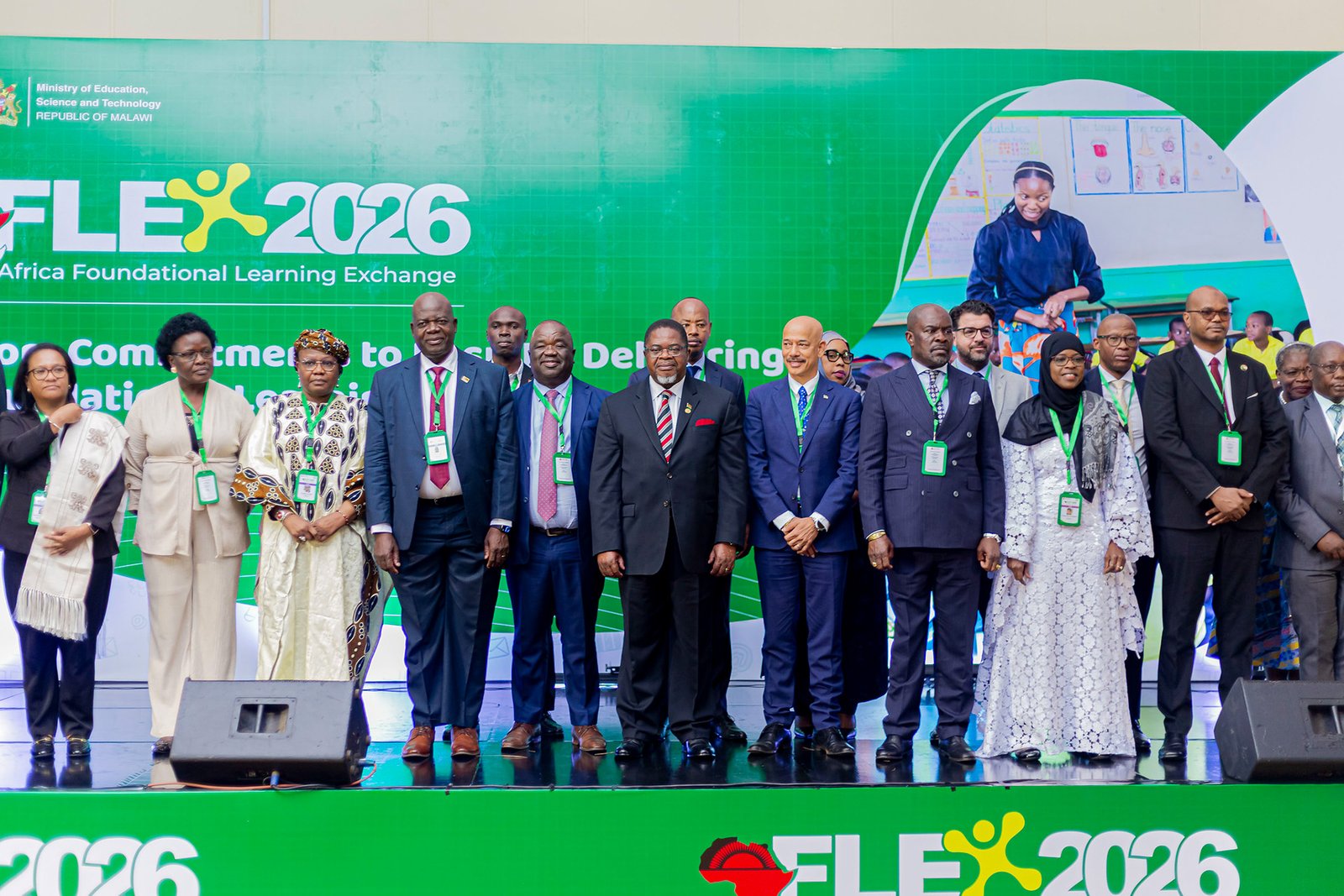
LILONGWE, Malawi, July 20, 2026. Ministers, deputy ministers, permanent secretaries and heads of government delegations from 42 African governments and the African Union have agreed to continue a collective plan to get their children reading for meaning, doing maths with understanding, and reasoning. At the close of the third edition of the Africa Foundational Learning Exchange (FLEX2026) in Lilongwe, Malawi, country representatives committed to sustaining action across six shared areas — from funding foundational learning to embedding artificial intelligence in teaching and learning. Fresh financing commitments from governments' own budgets and philanthropy are now on the table, working towards a shared goal: ending learning poverty in Africa by 2035.
For three days, policymakers and education stakeholders gathered at the Bingu Wa Mutharika International Convention Centre to measure progress against the commitments made at FLEX2024 in Kigali, under the theme "From Commitments to Results: Delivering Foundational Learning at Scale". Malawi is the third stop on a journey that began in Freetown in 2023.
Across much of the continent, up to nine in ten ten-year-olds cannot read a simple sentence or do maths with understanding – a failure that limits what a generation will earn, contribute, and build.
"This crisis is not a failure of children's intellect. It is a gap in how systems deliver," said Hon. Bright Msaka, SC, Malawi's Minister of Education, Science and Technology, and Guest of Honour, in his remarks opening the exchange. "We are not asking for more declarations. We are waiting to return to our capitals to chart, review, and execute with fidelity."
The sharpest words came from pupils of Nkwiji Primary School in Malawi. They asked leaders for reading and numeracy materials in languages they understand, teachers who can deliver learning at the right pace, schools that hold up against climate shocks, and fair access for children with disabilities.
"Do not just exchange ideas; exchange promises," they told the hall. "Act for us; act with us to end learning poverty together."
SIX SHARED AREAS NOW FRAME THE WAY FORWARD
Building on commitments made at FLEX2024, governments used evidence from the past two years to shape what comes next. Representatives from 42 countries backed the outcomes, supported by the African Union, the World Bank, UNICEF, The Gates Foundation, the Federer Foundation, the Mastercard Foundation and Hempel Foundation, and other education stakeholders in the room. Governments also agreed to strengthen the existing tracking mechanism so the next FLEX can report on delivery. Under each area, governments set out what they will do, with partner support:
- Political leadership and ownership. Governments will lead the reform and anchor foundational learning in national systems and budgets; partners will support systems strengthening rather than substitute for them.
- Financing and equitable resourcing. Create a dedicated budget line for foundational learning covering teacher training, assessment, coaching, learning materials, and pupil welfare.
- Data, assessment and accountability. Strengthen the flow and use of quality data from schools to the national level, and build credible measurement and accountability systems.
- Scaling evidence-based teaching. Embed proven programmes inside government systems, including artificial intelligence and education technology, as everyday teaching tools so results reach every classroom – not only pilot schools.
- Partner coordination and alignment. Adopt partnership compacts where governments set the priorities and partners align funding behind them.
- Whole-child access and transitions. Align early-childhood admission and transition rules so children start school ready to learn, with a focus on those out of school and in hard-to-reach areas.
Delegates pointed to evidence that reform delivers when governments own it. In Tanzania, the MEWAKA coaching programme lifted reading proficiency from 64% in 2021 to 90% in 2025. Nigeria has taken Teaching at the Right Level to 12,000 schools. Malawi's BEFIT programme has reached close to 890,000 pupils and trained 17,900 teachers — though delegates were clear that reach alone is not the measure that counts.
FINANCING COMMITMENTS AND NEW INITIATIVES
Governments are backing the 2035 goal with their own budgets. Sierra Leone dedicates 21% of national spending to education; The Gambia now channels a quarter of its education budget to foundational learning.
Partners matched that commitment with new capital. FLEX2026 launched FLIGHT, the Foundational Learning Initiative for Government-Led Transformation, mobilising US$35 million from philanthropy partners pooled behind national plans rather than separate donor projects. The Global Partnership for Education (GPE) pledged a further US$37 million for countries including Lesotho, Namibia, Zambia, and Zimbabwe. The World Bank confirmed continued support through its US$1.5 billion AIM4Learning programme, part of a US$16 billion education portfolio across the continent.
"Countries are going through very tough fiscal pressure, but it is not just about getting resources. It is how we use those resources that matters," said Albert Nsengiyumva, Executive Secretary of the Association for the Development of Education in Africa (ADEA), which convened the event. "It is how we build continuity and embed accountability into our systems so that our children can be proud of their countries."
THE ROAD TO ABIDJAN
The next FLEX will take place in Abidjan, Côte d'Ivoire. Governments and partners will report on how far these commitments have translated to classrooms, with progress reviewed at the quarterly Africa Foundational Learning Ministerial Coalition meetings ahead of the Abidjan convening.
– ENDS –
ABOUT FLEX2026
The Africa Foundational Learning Exchange (FLEX) is a continental platform where African governments and their partners exchange evidence on how to ensure every child learns to read, write, and do basic mathematics. FLEX2026 was hosted by the Government of Malawi and convened with the Association for the Development of Education in Africa (ADEA) and partners. Previous Exchanges were held in Freetown (2023) and Kigali (2024).
Key references
- FLEX2026 official website
- FLIGHT Executive Summary
- PAL Network — ICAN/ICAR Report
- Pictures from FLEX 2026
- FLEX outcomes document
Media contacts
- MoEST Malawi Public Relations Unit: Lily Kampani, blkampani@gmail.com
- Association for the Development of Education in Africa (ADEA): Chinedu Anarado, c.anarado@afdb.org
- Africa Practice: Joslyne Muthoni, jmuthoni@africapractice.com
- Speak Up Africa: Ousmane Toure, ousmane.toure@speakupafrica.org