
From memorization to meaningful learning: ADEA webinar explores critical thinking for transformative education in Africa
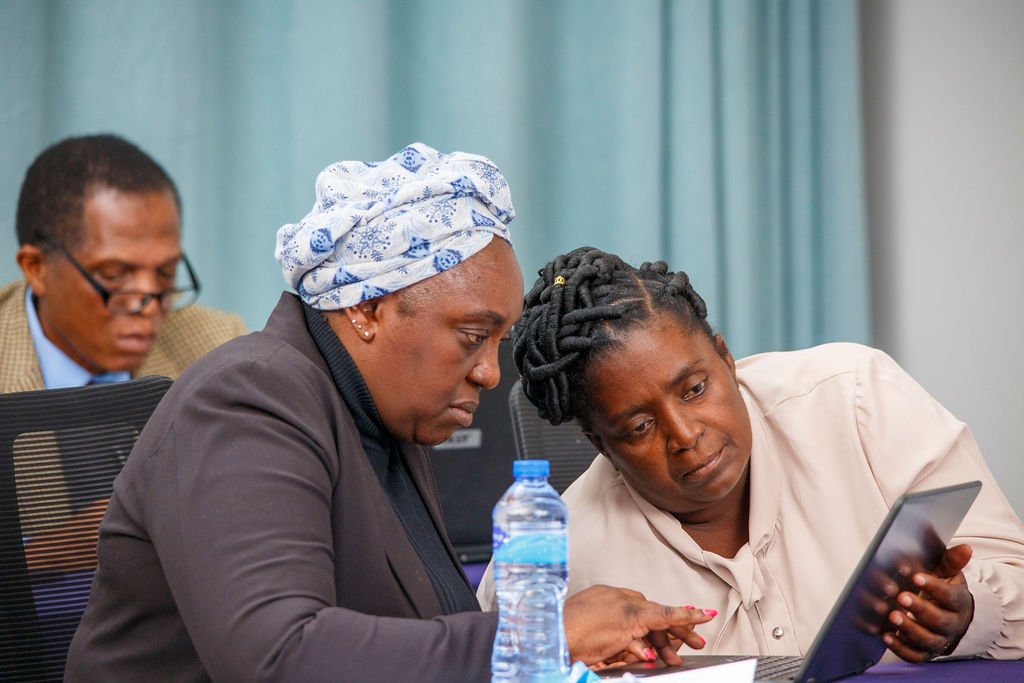
Developing critical thinking in African classrooms requires more than introducing new competencies into national curricula. It demands changes in how teachers are prepared, how learning takes place and how students are assessed, particularly in education systems where examinations continue to reward memorization over reasoning. This was the central message of the first webinar in the three-part series, “Thinking Beyond the Classroom: Cultivating Critical Minds for Transformative Teaching, Leadership and Learning in Africa,” convened on 15 October 2026 by the Association for the Development of Education in Africa (ADEA), through its Inter-Country Quality Node on Teaching and Learning (ICQN-TL).
Bringing together representatives from African ministries of education, curriculum developers, school leaders, teachers and researchers, the webinar examined country experiences and practical approaches to developing learners' ability to question, analyze information, solve problems and apply knowledge. The exchange sought to identify lessons that education stakeholders could adapt and test within their respective systems, recognizing that curriculum reform alone does not necessarily translate into changes in classroom practice.
Opening the discussion on behalf of ADEA's Executive Secretary, Shem Bodo, Senior Programs Officer at ADEA, situated the exchange within continental commitments emerging from the Transforming Education Summit and subsequent declarations in Mauritius, Kigali, Accra and Lilongwe. He recalled how these commitments, particularly those from the 2025 ADEA Triennale in Accra, called for systemic approaches connecting teacher preparation, continuous professional development and leadership accountability to strengthen learners' soft skills.
Shem expressed that this transformation must begin in the earliest years of education, when children first develop the confidence to question and explore ideas.
"A child who has only ever been asked to repeat will struggle to think critically. Critical thinking is not a luxury reserved for secondary school or university. It begins with the questions we invite children to ask in the early grades."
Reflecting on World Teachers' Day, celebrated earlier in October, he emphasized that recognizing teachers' contributions must be accompanied by sustained investment in their professional development, support and working conditions. He also drew on lessons from the 2024 EdTech Conference in Abuja to caution against allowing artificial intelligence to determine educational priorities.
"Technology can amplify good pedagogy, but it cannot replace it."
Evidence of efforts to integrate critical thinking into national education reforms emerged from a situational analysis presented by Jean Iyakaremye, Assistant Lecturer, Educational Advisor and Critical Thinking Course Facilitator at Kepler College. Drawing on experiences from Rwanda, Ghana and Morocco, she illustrated how countries are incorporating higher-order thinking skills into curriculum frameworks, teacher development and learning approaches.
Rwanda's introduction of a competency-based curriculum in 2015, supported by teacher training and critical thinking pedagogy modules, was associated with an increase in its Critical Thinking (CT) Integration Index from 29 to 68 over eight years. In Ghana, the 2019 curriculum framework placed greater emphasis on critical thinking, creativity, communication and collaboration, with pilot schools reporting a 34% improvement in analytical writing scores. Morocco's Vision 2030 reforms introduced inquiry-based learning, dialogue and teacher retraining, alongside a reported 22-point improvement in mathematics reasoning and a Critical Thinking Integration Index of 58, the highest among Francophone countries assessed.
These developments nevertheless revealed an important distinction between incorporating critical thinking into education policy and creating the conditions for learners to develop it. Teacher-centered instruction, large classes, limited professional preparation and examinations that reward recall continue to constrain implementation. The analysis also highlighted disparities linked to gender, language and geography, with Francophone countries reportedly scoring 8–12 points lower on the index, partly reflecting centralized examination systems and slower curriculum reforms.
The importance of ensuring that reforms respond to learners' experiences was captured in a question Jean recalled from a student attending an education conference in Kenya:
"How do you design things for students without involving students?"
The question drew attention to an often-overlooked dimension of curriculum reform: involving learners in decisions about the education they receive. It also reinforced the case for context-responsive approaches, including student-centered teaching, teacher coaching, project-based assessments and instructional materials in national languages.
While country experiences demonstrated the possibilities and constraints of system-level reform, Professor Yashwantrao Ramma of the University of Mascaraigne, Mauritius, examined what developing critical thinking requires in everyday teaching. He argued that meaningful learning should be measured not simply by students' ability to reproduce information, but by their capacity to question, connect ideas and exercise judgment.
"We must move from memorization as an end in itself, towards meaningful learning, the capacity to question, connect, reason, judge, and act responsibly. Critical thinking is therefore not an optional enrichment activity. It is central to teaching, leadership, and learning."
Professor Ramma outlined six intellectual processes, conceptualizing, applying, analyzing, synthesizing, evaluating and reflecting—and introduced the EIA model as an approach to assessing critical thinking. Using practical examples, he demonstrated how questioning assumptions, examining misconceptions and applying knowledge to unfamiliar situations can help educators understand the reasoning behind students' answers rather than focusing exclusively on whether those answers are correct.
This distinction becomes particularly important as artificial intelligence enters more classrooms. Professor Ramma questioned whether higher grades following the introduction of AI necessarily demonstrate improved understanding, or whether technology may conceal weaknesses in students' independent reasoning. His intervention highlighted the need for assessment approaches that distinguish genuine learning from AI-assisted performance while preserving the role of human judgment and ethical reflection.
Both speakers advocated for adopting Bloom's Taxonomy as a framework for curriculum development, with learning objectives, teacher preparation and examinations aligned to higher-order thinking skills. The recommendations also emphasized strengthening teachers' capacity to facilitate inquiry and introducing assessment approaches that allow learners to demonstrate how they analyze, evaluate and apply knowledge.
Across the exchange, a common lesson emerged: countries can draw on promising practices, but their effectiveness depends on how they are adapted to national priorities, institutional capacities and classroom realities. Shem encouraged participants to identify at least one approach from the discussion, experiment with it in the coming weeks and reflect on what its application reveals.
The webinar forms part of ADEA ICQN-TL's wider effort to promote continental knowledge exchange on transformative teaching and learning. The second session, scheduled for February 2027 under the theme “Leading for Change: Building School Cultures that Promote Thinking,” will examine how school leadership can create environments that encourage critical inquiry.
The experiences shared point to a broader implication for African education systems: critical thinking cannot be developed through curriculum reform alone if classroom instruction and examinations continue to reward memorization. Progress will depend on connecting policy ambitions with the preparation, teaching practices and assessment approaches that enable learners to think independently and apply what they know.
