With Lilongwe weeks away, Africa's education ministers align on FLEX2026, FLIGHT launch, and the accountability imperative
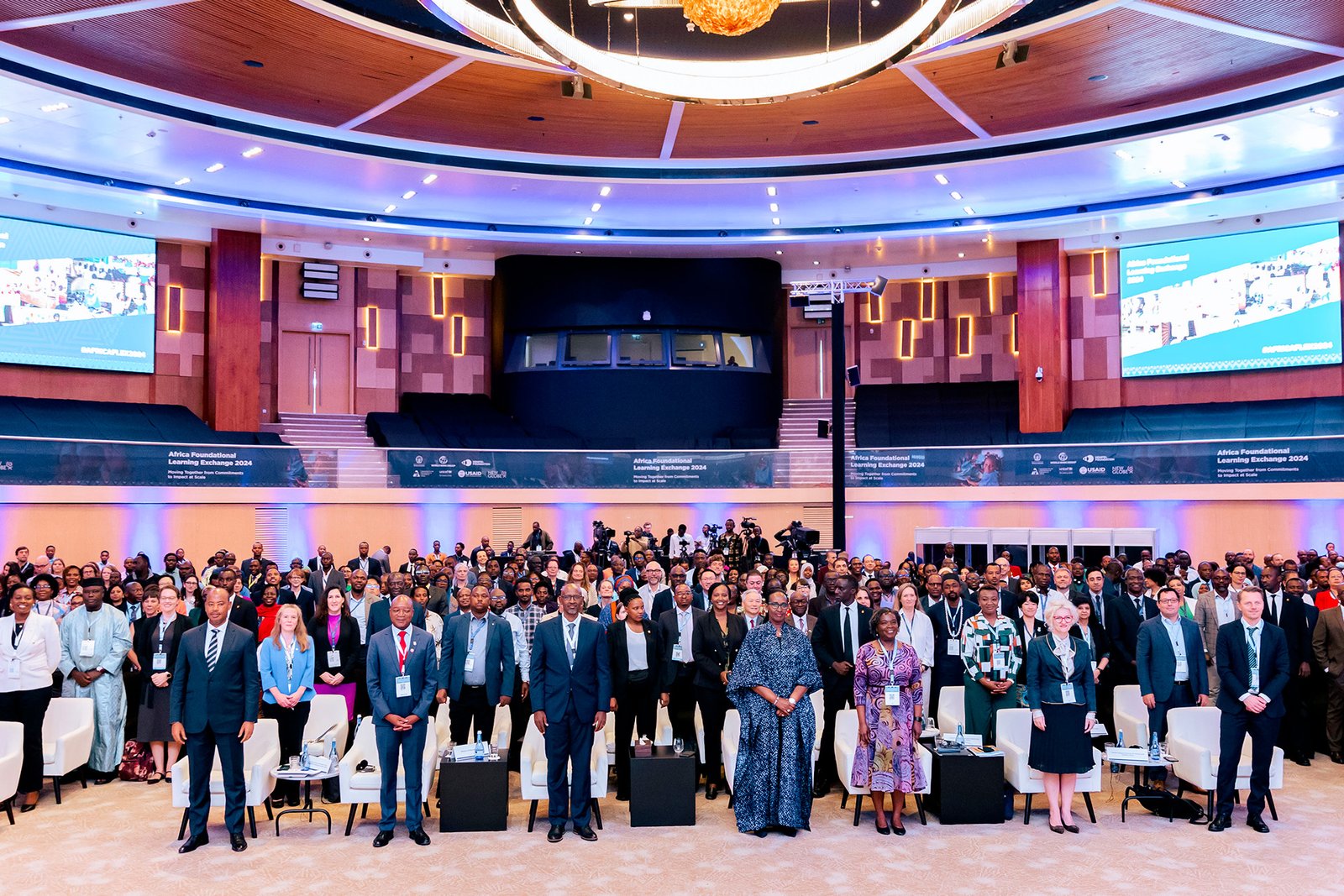
On Thursday, 25 June 2026, the Africa Foundational Learning Ministerial Coalition (AFLMC) convened for its 11th session, bringing together education ministers, policymakers, and development partners from across the continent. Chaired by Hon. Dr. Bright Msaka, Minister of Education, Science and Technology of Malawi — the host country for the upcoming Africa Foundational Learning Exchange (FLEX2026) — the session served as the final ministerial alignment point ahead of FLEX2026 in Lilongwe (15–17 July 2026), covering three core areas: preparations for FLEX2026, the formal introduction of FLIGHT's new leadership, and Malawi's progress on foundational learning reform as host country.
Opening the session, Dr. Msaka framed the convening as a renewal of the collective pledge made to Africa's children. He reminded ministers that FLEX2026 will only be as powerful as the preparation each country brings to it.
"FLEX is not a destination but a stop on the journey — a place to learn from one another, shape strategies, and hold ourselves publicly accountable," he said, adding that the true measure of the Coalition's gatherings lies in their impact on children, classrooms, and teachers.
He called on every minister to arrive in Lilongwe with data, honest self-assessments, and delegations ready to engage.
Dr. Obiageli Ezekwesili, Founder and CEO of Human Capital Africa, shared reflections from the ministerial breakfast on foundational learning hosted by the British Council, FCDO, and the What Works Hub for Global Education on the margins of the Education World Forum (EWF). Five themes emerged consistently from conversations with policymakers: political leadership and the partnerships required to sustain reform; financing and affordability of system-level change; implementation challenges from national policy to the classroom; the use of data and evidence in decision-making; and equity — whether reforms are genuinely reaching the most marginalised learners. Dr. Ezekwesili underscored that accelerating progress demands sustained political prioritisation across election cycles and credible engagement with finance ministries, particularly as global education funding contracts. She affirmed the continued relevance of the six resolutions adopted at the ADEA Triennale in Accra:
"The six resolutions remain the right priorities for us. The fact that our governments are arriving at them and working on them with a sense of ownership is the best progress we could say we have made."
Lindiwe Chide, Deputy Director of Quality Assurance at Malawi's Ministry of Education, Science and Technology (MoEST), delivered the session's country spotlight, presenting Malawi's progress across five major programmes: continual teacher professional development; a national mathematics curriculum reform; the provision of differentiated learning materials; the Building Education Foundations through Innovation and Technology (BEFIT) initiative, which has deployed over 200,000 solar-powered tablets across 1,088 schools in 34 districts; and the piloting of Teaching at the Right Level (TaRL), which Malawi is positioning for national scale. With support from the Global Partnership for Education (GPE), the country has also invested in classroom infrastructure and teacher housing. Acknowledging ongoing challenges — including material shortages and classroom overcrowding — Chide noted that teacher preparation and access to current learning materials remain the most critical levers.
"If the teachers are not well-prepared, there is nothing that is going to happen in the classroom," she said.
The session formally introduced FLIGHT — the Foundational Learning Initiative for Government-Led Transformation — ahead of its official public launch at FLEX2026. FLIGHT's incoming Executive Director Joan Oviawe, represented by Victoria Egbetayo from the Gates Foundation, outlined the initiative's approach: responsive, government-led support that begins with countries' own reform priorities, bottlenecks, and readiness — rather than arriving with predetermined solutions. She noted that FLIGHT is designed to address a longstanding gap in the technical assistance landscape, where externally defined priorities have too often sat alongside, rather than within, national government systems.
"FLIGHT is not designed for governments that have already figured it out. It is designed to meet you where you are and to work alongside you from there," she said.
The session introduced the Expression of Interest (EOI) process and a country readiness survey, which will include options for governments to schedule one-to-one consultations at FLEX2026 in Lilongwe.
Dr. Ken Ndala, Principal Secretary at MoEST Malawi, provided a comprehensive readiness update on FLEX2026, outlining the convening's core purpose: to showcase successful interventions and new initiatives, foster partnerships, and strengthen accountability for improved learning outcomes at the classroom level. He confirmed that government voices will be central to the programme, with a stronger emphasis on south-south exchange, new partner collaborations, and accountability frameworks designed to keep the continent walking the talk on foundational learning.
Closing the session, ADEA Executive Secretary, Albert Nsengiyumva, urged ministers to use the Triennale resolutions as an honest benchmark — naming stalled progress plainly as a starting point for acceleration, not a source of embarrassment. The 11th session reinforced the Coalition's trajectory from dialogue to delivery: progress on foundational learning is no longer hypothetical, it is documented and growing. As the continent's education ministers and partners prepare to convene in Malawi, the direction is clear — translate alignment into action, and action into outcomes for the children who cannot afford to wait.
FLEX2026 will be held in Lilongwe, Malawi, from 15–17 July 2026. For more information, visit the website at https://flex2026.adeanet.org