Côte d’Ivoire completes the second capacity-strengthening session under ADEA’s Education and Skills Data Challenge initiative
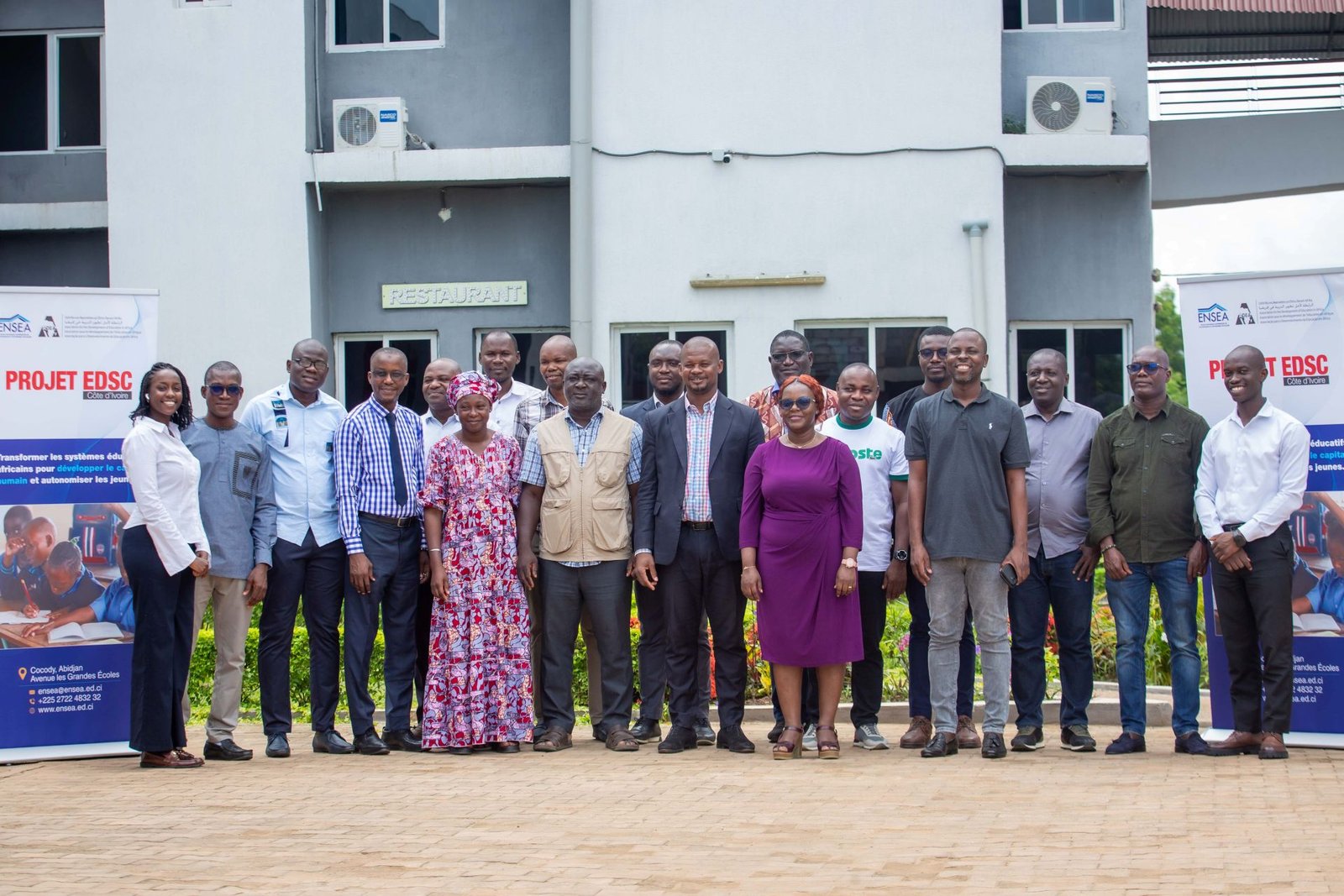
Between the 1st to the 5th of June 2026, the École Nationale de la Statistique et d'Économie Appliquée (ENSEA), with support from the Ministry of National Education, Literacy and Technical Education (MENAET), organized the second capacity-strengthening session on "Advanced data analysis using STATA" in Yamoussoukro, Côte d'Ivoire. This activity was delivered under the Tackling Education and Skills Data Challenge (ESDC) initiative, to build the capacity of the Ministry of National Education, Literacy and Technical Education (MENAET), to generate, analyze and use data to inform its policy decisions.
A 2021 report from the UNESCO Institute of Statistics shows that only 17 out of 55 African countries currently possess data on minimum proficiency levels in foundational literacy and numeracy. By implication, most African countries are generating data, but unable to analyze and use them to inform education policy decisions. As such, the ESDC initiative aims to support up to 30 African countries over a five-year period to strengthen the production and use of quality education and skills data for evidence-based policymaking, program implementation, monitoring, and evaluation.
As part of the initiative’s first cohort of 11 countries, Côte d’Ivoire has previously completed an initial training session in February 2026, which focused on research design and the development of rigorous research protocols for policy briefs and results-tracking frameworks.
The second session focused on advanced data analysis using STATA software. Over the course of five days, 15 members of staff from the Ministry were led through practical training sessions designed to strengthen their ability to conduct faster and more reliable data analysis while applying reproducible workflows and automation best practices. The training aimed to reinforce the Ministry’s capacity to generate and apply high-quality evidence in support of education reforms and strategic investments.
During the session, the Ministry’s project focal point, Omar Gbouazo, emphasized the importance of strengthening institutional capacity in research and data management. He noted that the training would help participants transition from traditional Excel-based data management toward more advanced analytical practices using STATA, ultimately improving efficiency, data reliability, and evidence-based decision-making within the education sector.
Gondo Kia Jokthan, professor of statistics at ENSEA and session facilitator, emphasized:
"We believe that the databases the participants work with on a daily basis deserve proper attention, they need to be cleaned and transformed into reliable knowledge that can inform decision-making in the education sector."
Participants commended the practical and hands-on nature of the training, highlighting the quality of instruction, technical support, and knowledge exchange throughout the session. Kouakou Stéphane, Economic Policy Manager in the Ministry's Research, Planning and Statistics Department (DESPS), praised the initiative, stating:
“The high quality of the training and the expertise of the facilitator exceeded my expectation. The program has greatly strengthened my professional capabilities and confidence. I am deeply grateful to ADEA and ENSEA for their commitment to excellence and for providing such a valuable learning opportunity. They truly pulled out all the stops to make this initiative a success."
Other participants expressed confidence in applying the newly acquired skills to improve data management and analysis processes within their institutions and to better support decision-makers in the education sector.
Looking ahead, organizers and ministry representatives expressed interest in expanding future training opportunities to additional institutions and interministerial sectors to promote a more harmonized and data-driven working environment.
The ESDC initiative is implemented by the Association for the Development of Education in Africa (ADEA) in partnership with the Centre for Innovative Teaching and Learning of the Mastercard Foundation. This training was a crucial step in the efforts by the Ministry to advance and transform how they manage and use education and skills data to drive better policymaking and improve learning outcomes. Further training sessions are planned throughout 2026 in Cote d’Ivoire, including a large-scale training programme expected to reach more than 300 regional education staff across Côte d'Ivoire.
By enhancing the research, data analysis, and evidence-generation capacities of Ministries of Education, the ESDC initiative hopes to directly contribute to advancing Sustainable Development Goal 4 on Quality Education and improving learning outcomes across the continent. The initiative continues to expand since its inception in 2024, with more countries being engaged and preparing for implementation according to their individual data-use needs.