Africa EdTech Research Initiative Completes Country Workplanning Workshops in Senegal and Malawi
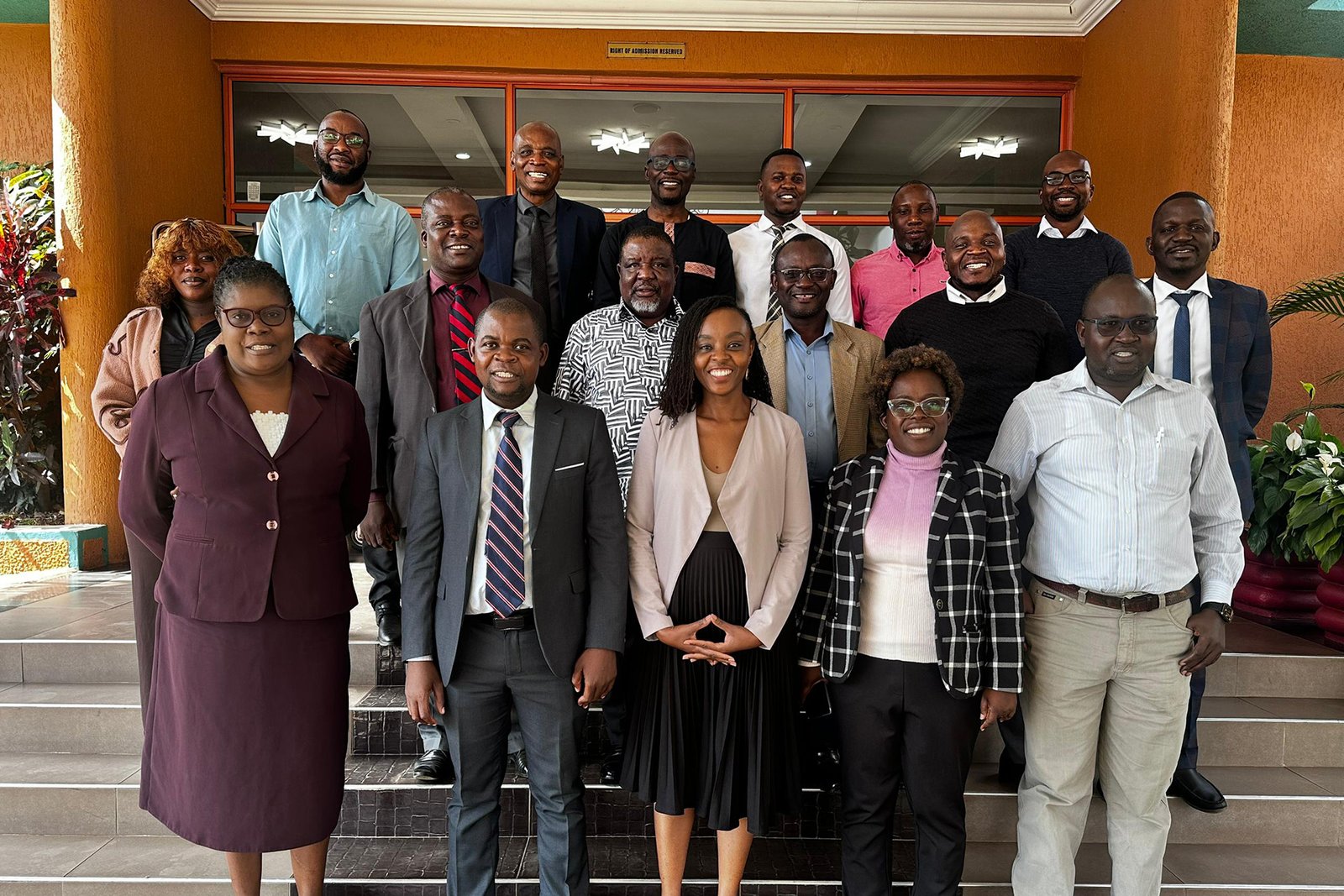
Abidjan, June 2026 — The implementing consortium of the Africa EdTech Research Initiative (AERI) has concluded the second and third country workplanning and relationship building workshops in Senegal (12–13 May 2026) and Malawi (26–27 May 2026). This followed the inaugural workshop in Kenya in April. The Senegal and Malawi activities convened representatives of ministries of education, national EdTech Fellows, in-country research institutions, and the implementing consortium to co-produce national results frameworks, define EdTech research priorities, and agree on operational workplans for the remaining project period. There was also a reflection on the most effective coordination mechanisms for EdTech research, with a focus on strengthening alignment between research priorities, policy needs, and decision-making processes.
AERI is a three-year programme supported by the International Development Research Centre (IDRC) Canada and implemented by a consortium comprising the Association for the Development of Education in Africa (ADEA), EdTech Hub, and Education SubSaharan Africa (ESSA). The initiative aims to strengthen the capacity of Ministries of Education in Kenya, Malawi, and Senegal to design, implement, and lead their own EdTech research agendas, led and coordinated by government and grounded in national priorities for improving foundational learning outcomes.
In Senegal, the workshop at Saly Portugal opened with a substantive presentation from the Division de la Promotion des Technologies de l'Information et de la Communication (DPTIC) — the technical arm of the Ministry of National Education responsible for the country's digital education strategy. The presentation demonstrated the scale and ambition of Senegal's existing EdTech infrastructure: a national ecosystem of 41 integrated digital platforms under the Système Intégré de Management de l'Éducation Nationale (SIMEN), serving more than 22,700 schools and 1.64 million national education identifiers. The DPTIC also outlined its ‘Programme 105,000’ — a national initiative to certify 105,000 education personnel in digital tools and artificial intelligence by 2030 — and the recently adopted Axis 6 of the Stratégie Nationale de l'Éducation (SNE) 2026–2030: the first strategic axis in the history of Senegal's education sector planning to be dedicated entirely to digital education and sovereign artificial intelligence.
The Ministry's presentation signaled Senegal’s vision and priorities. Representatives thus leveraged the workshop to request research support to help it understand what works in the country’s context. The DPTIC confirmed that it would serve as the institutional point of entry for AERI within the Ministry for the full duration of the programme, an anchor that provides structural continuity and accountability at the highest technical level of the Ministry.
Over two days of structured, participatory work, the Senegal workshop produced a co-constructed national results framework aligned with the Ministry's six EdTech priorities, a set of national research priorities, and an operational workplan collectively validated by all participants.
In Malawi, the workshop was opened by Dr Fidelis Makaula, Director of Open and Distance Learning at the Department of Open and Distance E-Learning (DoDEL) within the Ministry of Education, Science and Technology (MoEST). His opening remarks situated the AERI within the broader national context of education quality, access, and equity, and affirmed the Ministry's commitment to treating this research agenda as its own. The presence of a departmental director to formally open the proceedings — rather than a protocol representative — sent a clear signal of the level of institutional ownership that Malawi intends to maintain throughout the programme.
In Lilongwe, efforts focused on Malawi's EdTech priorities, the identification of core research questions grounded in national policy realities, and a discussion of how the AERI research agenda can be integrated with existing EdTech initiatives already underway in the education system. Rather than treating the initiative as a parallel programme, participants worked deliberately to map the connections between the AERI and current national efforts — an approach that maximises impact and avoids the fragmentation that has historically weakened EdTech evidence ecosystems in the region.
Following the two-day workshop, the consortium delegation was received at the Ministry of Education, Science and Technology in Lilongwe by Mrs Tokozile Banda, Principal Secretary for Administration, on Thursday May 28th. Mrs Banda welcomed the initiative warmly and pledged the Ministry's full support and assistance in ensuring that the research agenda contributes to better learning outcomes for Malawi's children. Her commitment, given at the level of the Ministry's administrative leadership, substantially strengthened the institutional conditions for AERI implementation in Malawi.
With workshops now completed across all three countries, the AERI has fully transitioned to its operational phase. Each participating country has co-authored its own results framework, defined its research priorities, and established a workplan with named responsibilities and timelines. The challenge ahead — as the consortium has acknowledged openly — is maintaining the momentum generated in Kenya, Senegal, and Malawi against the competing demands that each country team faces. The consortium has committed to regular engagement with national teams, early finalisation of research plans while the workshop conversations remain fresh, and swift mobilisation of research institution partners into the first operational activities.
Next phase is the development of a solid technical session on Edtech research for foundational learning at the Africa Foundational Learning Exchange.