AFLAI webinar explores sustainable capacity strengthening for learning assessments beyond conventional workshops
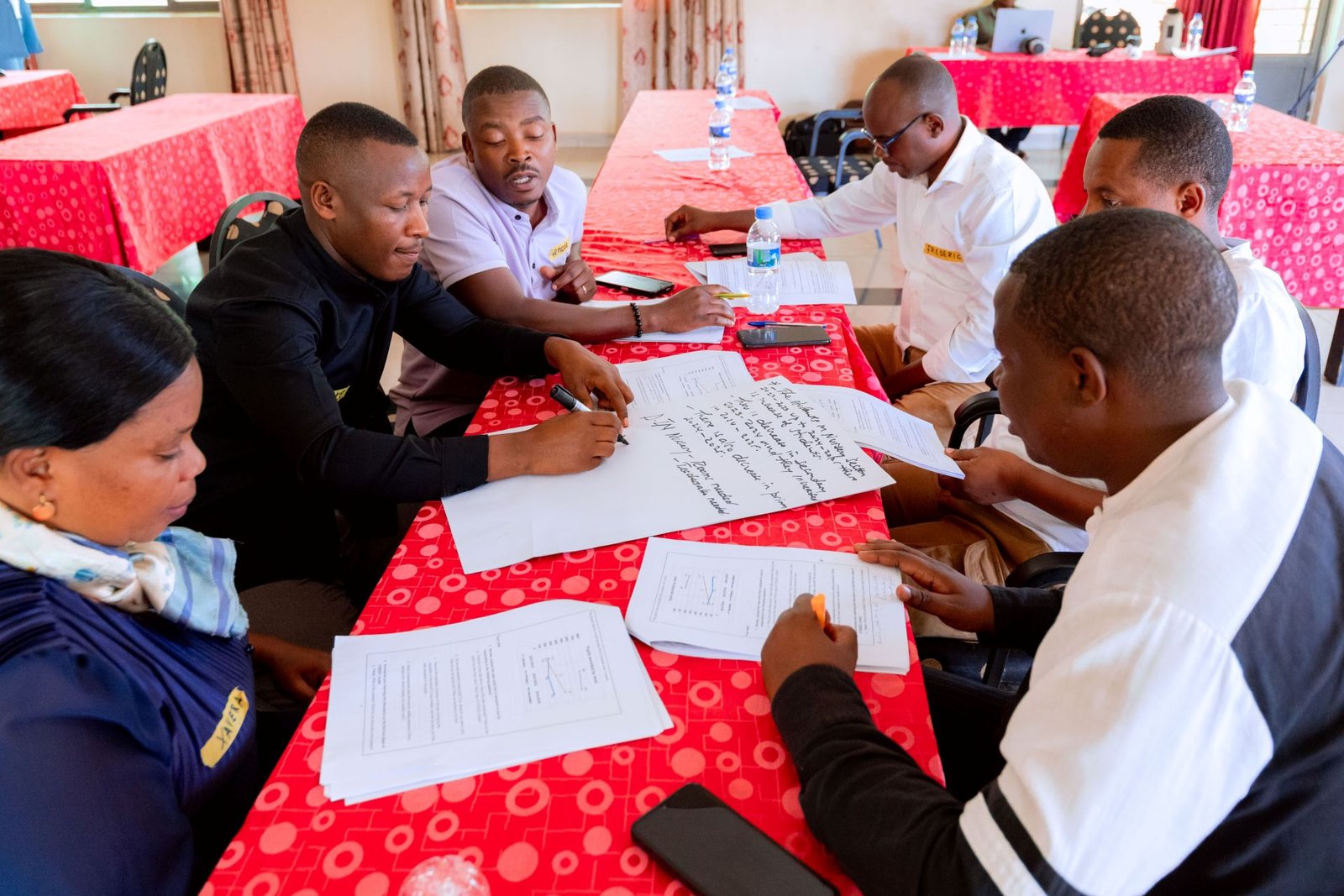
On Tuesday June 23rd, ADEA convened policymakers, technical experts, researchers, and development partners for a webinar under the Africa Foundational Learning Assessment Initiative (AFLAI), examining how countries can move beyond the conventional workshop model to build lasting capacity in foundational learning assessment. The webinar themed, “Capacity Strengthening Approaches: Beyond the Conventional Workshop Model: Exploring Sustainable Capacity Strengthening Models for Foundational Assessments.” was moderated by ADEA's Senior Foundational Learning Expert, Dr. Jacqueline Jere-Folotiya, and featured insights from Namibia's Ministry of Education, Innovation, Youth, Sports, Arts and Culture (MEIYSAC) and the UNESCO Institute for Statistics (UIS).
The discussion was responding to a problem familiar to assessment systems across the continent: technical skills in item development, sampling, enumerator training, and data analysis are routinely taught in workshops, but rarely stick. Evidence shared during the session put a number on the gap — up to 70% of new technical knowledge is lost within days if the training isn't reinforced through practice. That figure framed the question at the heart of the webinar: how can technical support be delivered to produce institutional change that outlasts the training itself?
The stakes go beyond any single session. As African countries scale up national foundational learning (FL) assessments, the need for technically proficient personnel continues to grow. Yet a persistent challenge remains one-off workshops that often leave participants with a theoretical grasp of assessment concepts, without the practical, applied skills required to carry out this work in practice. Country experiences raised during the session showed just how steep this challenge is, and how directly it can be addressed once capacity-building is redesigned around ownership rather than delivery.
In his remarks to open the webinar, ADEA Executive Secretary, Albert Nsengiyumva called for a fundamental shift in how technical capacity is built.
"We treat technical skills like assessment design as facts to be delivered in a briefing, rather than as crafts developed through repetition, feedback, and practice," he said.
"What if we stopped asking how we train more people in assessment design, and instead asked how we build systems where technical capability does not depend on who happens to be in the room? How can we reframe capacity strengthening so that it strengthens systems, not just individuals?"
He encouraged participants to share both successes and persistent challenges from across the continent and pointed to the upcoming Foundational Learning Exchange (FLEX) 2026 as the moment to take the conversation further.
Ronel Bosch, representing MEIYSAC, grounded the discussion in research on why conventional workshops fall short: one-way delivery leaves participants as passive recipients rather than active contributors, and the enthusiasm of a training session fades quickly once people return to competing daily responsibilities.
"Without coaching, modeling, and opportunities to practice, even excellent training becomes just another workshop — and we have experienced this," she said.
She shared Namibia’s success in this area, insisting it ensured participants are embedded as co-creators, engaging them directly in adapting initiatives like the Early Grade Reading Assessment (EGRA) and Early Grade Mathematics Assessment (EGMA) and developing a mathematics syllabus guide for pre-primary through Grade 3 — work that built technical understanding while giving participants real ownership of the tools they would later use.
Alpha Ba, Regional Advisor at UNESCO-UIS, broadened the discussion with lessons drawn from multiple countries, citing recurring pitfalls such as limited accountability for pre-training preparation and learning materials that aren't tailored to participants' real contexts. He pointed to what has worked instead: asynchronous delivery in the Gambia's EMIS Policy Academy, which let participants ask questions and apply lessons at their own pace; and the Tech-Enabled Disability-Inclusive Education (TEDDIE) initiative, which had trainees co-design the very tools they would use after training. The clearest signal from these cases, he noted, is that sustained impact depends on structured follow-up — mentoring, guidance materials, and communities of practice — without which even well-designed programs lose momentum.
Closing the session, Senior Program Officer at the Gates Foundation, Clio Dintilhac, urged countries to keep engaging with AFLAI directly:
"If you are thinking through challenges related to setting learning benchmarks, strengthening assessment design, or making better use of assessment data, please do reach out. We would be very keen to explore how this initiative can support your work."
The session made clear that the shift underway in foundational learning assessment is structural, not just technical — from one-off training events to systems built for sustained learning. AFLAI will carry these questions into further exchanges at FLEX 2026, where countries and partners will review progress against the FLEX 2024 Declaration. A country ‘s experience offers a lesson for the rest of the continent: when capacity-building is designed for ownership rather than delivery, the learning outlasts the workshop.