ADEA's Higher Education ICQN convenes webinar to rethink curricula and University-Industry partnerships
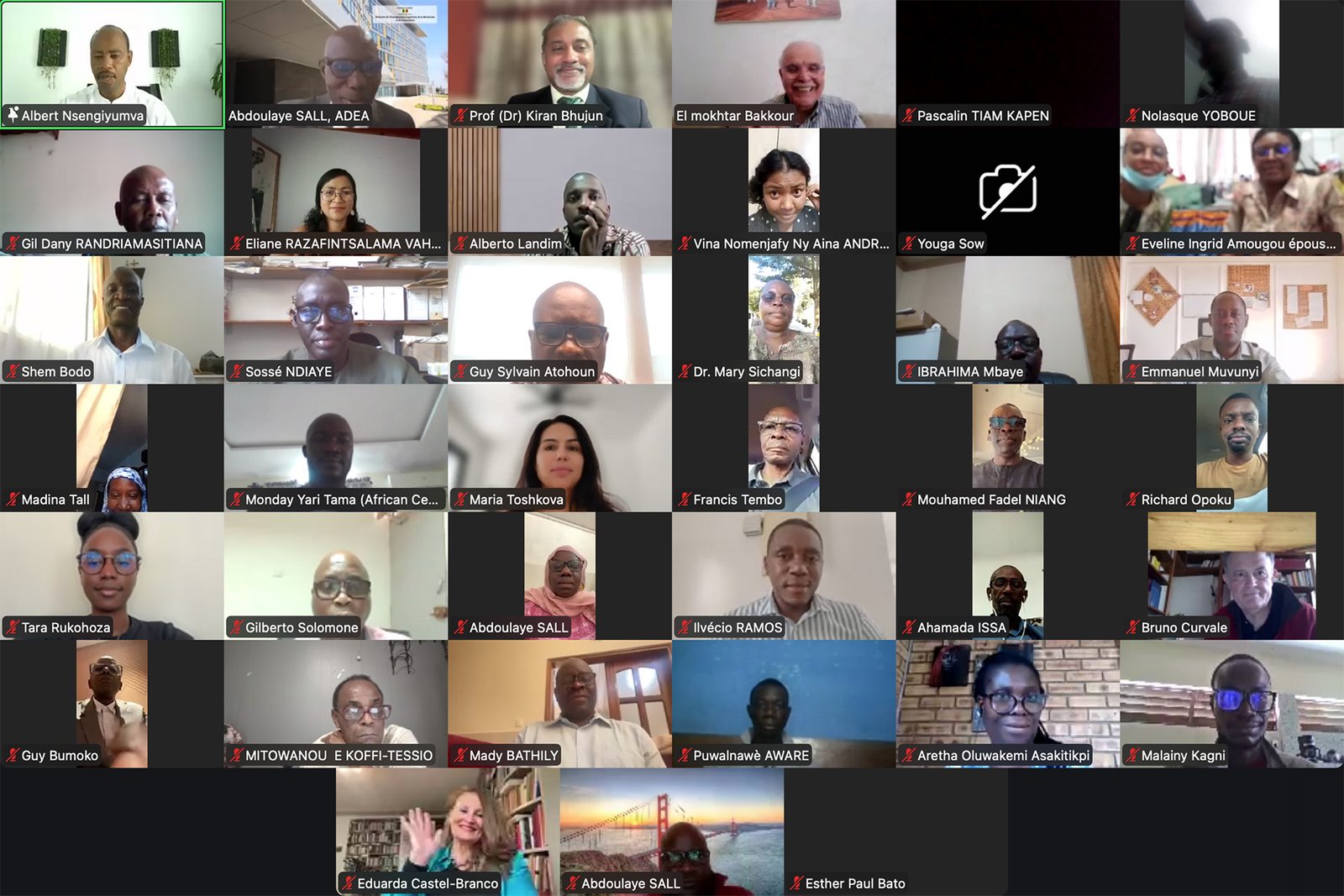
The ADEA Inter-Country Quality Node on Higher Education and Scientific Research (ICQN-HESR), convened a high-level webinar on Thursday 2nd April 2026 under the theme "Training Tomorrow's African Talent: Innovative Curricula and University-Industry Partnerships - From Campus to Company: Accelerating the Impact of African Talent". The session convened senior policymakers, university leaders, private sector actors, researchers, and young entrepreneurs from across the continent to examine how curriculum reform and stronger university-industry partnerships can better equip Africa's graduates for tomorrow's economy.
Opening the session, ADEA Senior Program Officer Shem Bodo, representing the Executive Secretary, Albert Nsengiyumva, set a clear direction:
“the gathering was not designed to rehearse well-known challenges, but to co-create practical, implementable solutions involving universities, governments, and industry in equal measure.”
He underscored the urgency of aligning higher education with labour market realities, noting that unemployment and underemployment among graduates remain persistently high despite rising enrolment across the continent.
Redesigning curricula for employability
The first panel examined the competencies African graduates need to thrive in a rapidly changing world. Speakers affirmed that while technical expertise remains essential, employers increasingly demand analytical thinking, creativity, adaptability, digital confidence, and leadership. Country examples illustrated how systems are responding: Mauritius has introduced micro-credentials that allow companies to co-design workplace-based learning recognised for academic credit — contributing to over 90% graduate employability even before completion. Experts from Kenya, Tunisia, and Morocco called for a decisive shift away from supply-driven university models toward curricula shaped by labour market intelligence, competency frameworks, and transversal life skills. Experts also identified the African Continental Qualifications Framework (ACQF) as a critical tool for harmonising graduate outcomes across diploma, degree, and doctoral levels, giving universities and employers a shared reference point.
Partnerships, Entrepreneurship, and Scale
The second panel explored university-industry partnerships and entrepreneurship as drivers of systemic change. Senegal's ISEP network offered a compelling model, with industry professionals defining competency standards and students alternating between academic study and enterprise placements. Examples from Madagascar, Cameroon, and São Tomé-et-Príncipe highlighted how legislative reforms, innovation hubs, and incubation centres are helping universities translate research into enterprise creation — particularly in agro-industry, digital technology, tourism, and green energy. Speakers also called for deeper South-South cooperation among African universities to support mobility, joint curriculum innovation, and shared capacity at lower cost and with greater contextual relevance.
The webinar spotlighted two young entrepreneurs whose journeys brought the discussion to life. From Sierra Leone, Mohamed Samu described how academic research evolved into an enterprise producing insect-based fertilizer and feed, now attracting regional and international investment. From Cameroon, Boris Mabou Fokam presented Green Power Biotechnology SARL and the Green Power Academy — combining biogas production with youth training in sustainable energy technologies. Both stories traced the full pathway from academic curiosity to enterprise creation and job generation.
Closing the session, ADEA Executive Secretary Albert Nsengiyumva articulated four priorities for the next phase of reform: aligning training with regional labour markets; embedding entrepreneurship and soft skills at the centre of curricula; strengthening links between higher education and earlier levels of the education system; and building trusted continental systems for qualification recognition and quality assurance.
Participants agreed that progress must now be driven by labour market intelligence, curriculum co-design with industry, expanded micro-credential frameworks, and stronger policy incentives for graduate employment.
The webinar forms part of ADEA's broader commitment, under its 2024–2028 Strategic Plan, to strengthen higher education's contribution to Africa's economic transformation — ensuring that the continent's growing talent base is not only educated, but equipped and empowered to drive it