
ADEA drums up support for a more focused push for classroom delivery at the IBSA Quality foundational learning symposium
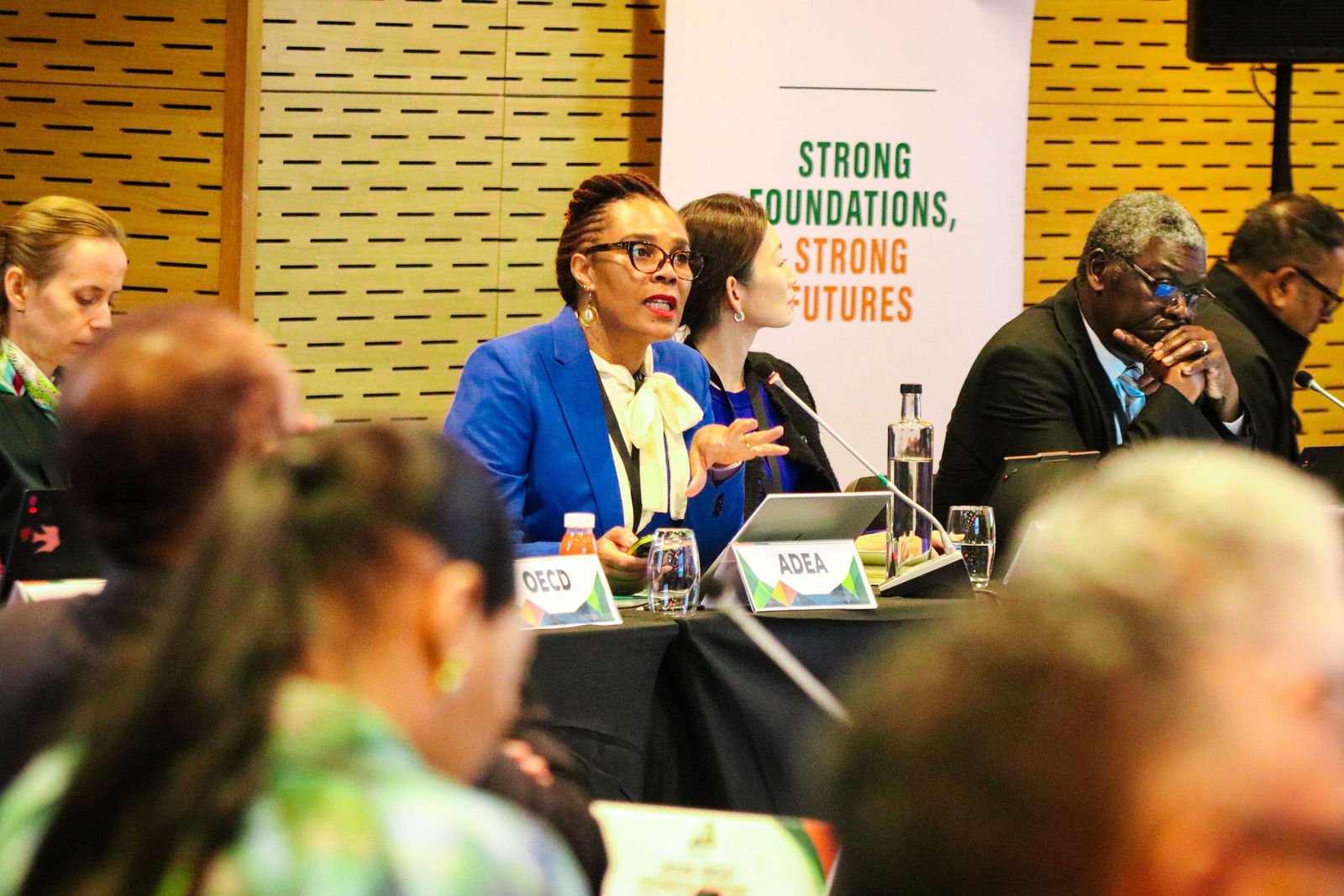
The Association for the Development of Education in Africa (ADEA) has urged the India, Brazil and South Africa foundational learning coalition (IBSA) to focus its planned foundational learning network on classroom improvements for children. ADEA Senior Foundational Learning Expert, Dr Jacqueline Jere-Folotiya, representing the ADEA Executive Secretary, Albert Nsengiyumva, argued this perspective at the 2026 IBSA Technical Meeting on Quality Foundational Learning (19–20 October) and the IBSA Symposium on Quality Foundational Learning (21 October), hosted by South Africa’s Department of Basic Education in Cape Town, South Africa.
The meeting, held under South Africa’s 2026 IBSA Chairship under the theme “Shared Foundations, Shared Futures: Advancing Literacy and Numeracy for Every Child”, follows the 2025 IBSA Outcome Document on Quality Foundational Learning. In it, Ministers in charge of Basic Education from the three countries expressed their intent to establish a Heads of State Leaders Network on Quality Foundational Learning and a technical working group to define how it will operate. Brazil attended in person whie India joined virtually. Partners, including UNICEF, which presented results from the Foundational Learning Action Tracker, and the OECD and UNESCO shared evidence alongside education officials from South Africa’s provinces.
Opening the Symposium, Deputy Minister of Basic Education, Dr Reginah Mhaule, described foundational learning as the cornerstone of educational success and said it improves when governments work closely with partners, support teachers, involve communities, and base policies on evidence.
The Minister of the Department of Basic Education, Hon. Siviwe Gwarube, reinforced a similar message during her opening remarks. She noted that the success of the IBSA partnership must ultimately be measured by its impact in the classroom. She called for a shift from dialogue and commitments to practical implementation, measurable results and sustainable financing that supports progress beyond political cycles and individual projects, and urged continued support for teachers and the use of assessment data to drive improvement.
ADEA's contribution reflected the views and position of the South African basic education leadership. Dr Folotiya’s presentation welcomed the IBSA Outcome Document’s holistic view of learning across early childhood and the early primary grades, and its position that countries should set their own age- or stage-specific expectations rather than adopt narrow global benchmarks. To make the document actionable, she proposed four steps: a small, practical set of shared measures with baselines, milestones and disaggregated results; a clear initial mandate for the technical working group, supported by country-designated technical focal points; a practical reading of the 10 per cent early childhood financing benchmark and a plan for resourcing the Network’s core work; and carrying the document’s equity and multisectoral commitments into implementation.
During the technical session on expanding the IBSA Heads of State Network, Dr Folotiya shared ADEA’s experience on driving the Africa Foundational Learning Ministerial Coalition (AFLMC), its expansion, progress and challenges since its establishment at the 2022 Triennale. Her central argument was that the network must integrate accountability from the start. She set out six design principles for IBSA to consider, presented as lessons to adapt rather than a blueprint to copy:
- Governance: with a clear mandate and defined roles, linking leaders’ engagement to technical follow-through.
- Inclusivity: with meaningful routes for countries and education stakeholders to shape priorities.
- Accountability: to demonstrate shared measures of progress, and regular review.
- Time-bound priorities: with clear milestones, target dates, responsibilities and review points for each priority.
- Credibility and impact: that separates the Network’s activities from country results, and reports limitations openly.
- Sustainability and coherence: to ensure a focused work programme connected to existing structures.
ADEA’s contributions provided a process-tested experience from Africa: how a ministerial coalition grew from 12 to 40 countries, how it began tracking its own commitments, and where the continent still falls short. The exchange runs both ways, as African countries have much to learn from India and Brazil's reform experience.
At the Symposium on 21 October, ADEAtraced the history of three Africa Foundational Learning Exchanges: Freetown (2023), Kigali (2024), where countries pledged to end learning poverty in Africa by 2035, and Lilongwe (2026), which asked whether commitments are reaching classrooms. The presentation drew insights from the FLEX2026 stock-take document and noted that that policy and data systems are not the same as classroom change.
She closed with five takeaways: own the reform, support teaching, close the data loop, resource delivery, align and adapt. Her intervention put one question to delegates: “What will children and teachers experience differently next year?”
At the end of the symposium, delegates agreed on six outcomes covering the use of data, government ownership, support for teachers, system strengthening, finance elements of delivery and alignment, partnerships and adaptation. Teacher support emerged most strongly from post-school-visit discussions. These outcomes closely align with the themes of the 2025 ADEA Triennale and FLEX2026.
