ADEA Champions African-Led Innovation at Inaugural Yidan Prize Conference in Dakar
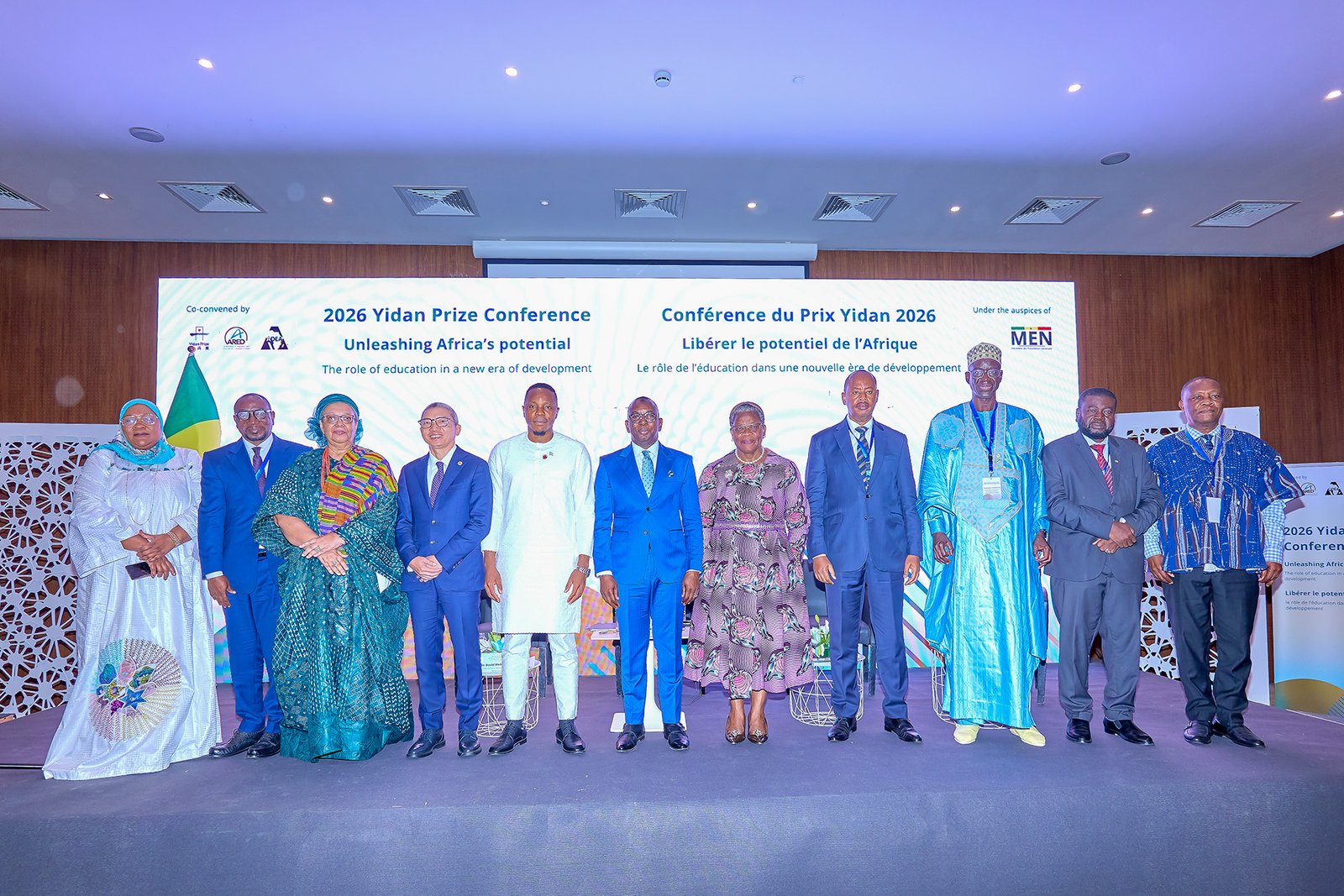
The Association for the Development of Education in Africa (ADEA) joined Senegal's Ministry of National Education (MEN), the Yidan Prize Foundation, and Associates in Research and Education for Development (ARED) as co-conveners of the inaugural Yidan Prize Conference in Africa, held in Dakar from 29th June to 1st July 2026. Themed Unleashing Africa's Potential: The Role of Education in a New Era of Development, the conference brought together ministers, policymakers, researchers, practitioners, and funders to examine how homegrown research and practice can drive education systems forward at scale — and to celebrate the innovations already delivering results across the continent.
The conference opened against a question that has sharpened considerably in recent years: Africa already holds much of the research, data, and practice needed to improve learning outcomes. The challenge is no longer generating evidence — it is acting on it. Speaker after speaker returned to that theme: collaboration over isolation, and homegrown solutions over imported ones.
Albert Nsengiyumva, Executive Secretary of ADEA, situated the conference within a broader continuum of work — alongside the 2025 ADEA Triennale in Accra and the upcoming Africa Foundational Learning Exchange (FLEX) in Lilongwe — as part of a continuous and accountable thread of reform. He stressed that research is what enables African countries to demonstrate impact, cautioning that failing to apply existing evidence would mean investing in education in vain. He underscored that every stage of the education pipeline — from foundational learning through secondary education and workplace readiness — depends on keeping teachers at the center of the system, even as technology evolves around them. On the purpose of learning itself, he offered a pointed reframe:
"Learning today is not accumulating knowledge — it is translating this knowledge into something tangible that will transform the lives of individuals and our society."
Charles Chen Yidan, Founder of the Yidan Prize Foundation, opened by reflecting on the role of language in learning and the conditions that make knowledge travel.
"Transforming education is not something anyone can do alone," he said, adding that gatherings such as this one "open doors for our worlds to come together to learn and share experience and expertise."
Hon. Moustapha Mamba Guirassy, Senegal's Minister of National Education, called for African education systems to root themselves in pre-colonial culture, knowledge, and language as a foundation for intellectual freedom. He drew a distinction between schooling and education, arguing that broadening that distinction opens space to rethink how learning is delivered. He named discernment, creativity, empathy, and ethics as the values education systems must instill, and called for an alliance of education societies across the continent.
"The whole nation becomes an actor for education," he said, "by example, by the way we treat our children."
Hon. David Moinina Sengeh, Chief Minister of Sierra Leone, went practical in his remarks, leveraging Sierra Leone’s progress in adopting AI and technology in education, as a case study on pushing innovation in education as a means of giving the young ones a chance, while drawing a clear boundary on the role of technology.
"Technology must be at the service of our people, not the other way around," he said, noting that teachers retain a quality no digital system can replicate — the ability to notice when a child arrives at school hungry. He argued that Africa's potential is neither hidden nor undiscovered: "It is sitting in our classrooms. Our work is not to discover it — it is to unleash it."
The conference's central case study came from Mamadou Amadou Ly, Executive Director of ARED and the 2025 Yidan Prize Laureate, recognized for advancing multilingual foundational learning in Senegal. He described the program's founding challenge: children were not learning because they could not relate to the language of instruction — a barrier common across the continent, not unique to Senegal. He credited MEN for institutionalizing and scaling the model, rather than treating it as a standalone project.
"The government is the one that integrates and adapts successful practices to touch each child," he said, identifying government ownership as the precondition for reaching children at national, regional, and continental scale.
The prize itself carries significance beyond its laureates. Since its founding, the Yidan Prize has built a growing body of recognized innovation in education globally. Celebrating lights like Mamadou Amadou Ly and ARED is how the field upholds the values it wants to see embedded in education systems — and signals to researchers and practitioners across the continent that evidence-backed, government-embedded work is the standard worth reaching for.
Across all sessions, participants returned to a shared conviction: Africa's progress in education depends on countries moving together, on evidence that is acted upon, and on homegrown practice that is recognized and scaled. For ADEA, the conference was not a standalone moment. It was a bridge. The 2025 Triennale set the direction. The conversations in Dakar — on foundational learning, school leadership, secondary education, AI, and the financing that underpins all of it — have sharpened what the continent is accountable for. FLEX 2026 in Lilongwe is where that accountability becomes concrete: countries will arrive with scorecards, not just presentations, and the peer exchange will test commitments against delivery. The question is no longer what Africa intends to do for its children. It is what it has done — and what it will do next.