
PASEC 2024: Africa's children are starting strong. But we must help them finish well.
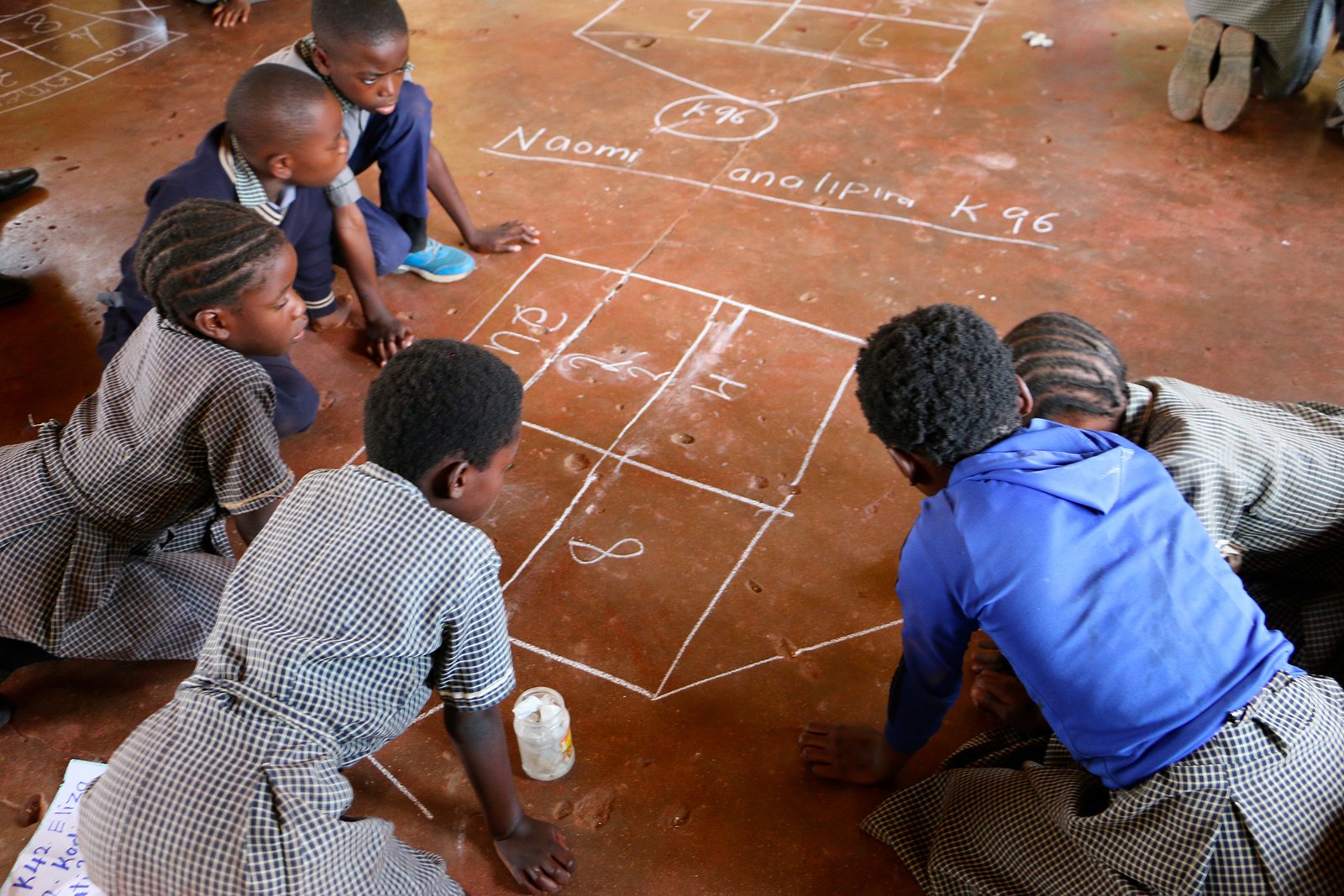
Across 16 African countries, more children than ever are learning to read in their first years of school. But most still leave primary school without the basic reading and maths skills they need. The new PASEC 2024 results show both truths, and tell us where to act.
But what PASEC is, and why does it matter that Africa runs it?
PASEC stands for Programme d’analyse des systèmes éducatifs de la CONFEMEN. It is a large learning assessment given to primary school children in 16 Sub-Saharan African countries, most of them francophone, along with Nigeria (anglophone) and Guinée-Bissau and Sao Tomé-et-Principe (lusophone). It is run by CONFEMEN, which, in English, stands for the Conference of Ministers of Education of French-speaking States and Governments.
The 2024 round is the third of its kind. It tested more than 110,000 pupils in 16 countries, and it measured two things: reading and mathematics. It measured them at two moments: at the beginning of primary school, and again at the end of primary school (Grade 6).
That second point matters. A test taken only at the end tells you that something went wrong. A test taken at both ends tells you when it went wrong. PASEC 2024 can show us whether children who start well keep progressing, or fall behind along the way.
PASEC also sets a clear bar. It defines a minimum level of skill a child should have. In plain terms: at the end of primary, a child at this level can read a short text and understand what it says, and can handle basic number work. This bar is the same one used to track Africa's progress on the global goal for quality education (Sustainable Development Goal 4).
Finally, who runs the test matters. PASEC is designed and carried out by African institutions, with African education ministries, in African classrooms. The questions are built for the languages and realities of the children being tested. This is Africa measuring itself, on its own terms, and producing the evidence for its own decisions. That gives the results a weight that external assessments cannot fully match.
But let’s unpack the result, and there is some good news: children are arriving better prepared!
The strongest progress in PASEC 2024 is at the start of primary school. In 2014, only about 3 in 10 children reached the minimum reading level early in primary. In 2025, it is more than 5 in 10 (51%). That is a 21 percentage points gain in a decade. Put simply: a child starting school today has a much better chance of learning to read than a child who started ten years ago.
The progress is not only in the average. The share of the strongest young readers, those at the highest level PASEC measures, nearly doubled, from 15% in 2014 to 29% in 2025. School systems are producing more confident early readers than before.
Early maths also improved over the decade. The share of children reaching the minimum level at the start of primary rose from 55% in 2014 to 70% in 2019, and has broadly held since.
Some countries moved faster than others. Between 2019 and 2025, Côte d'Ivoire, Guinée, Republic of Congo, Gabon, and Tchad all made significant gains in early reading.
Sénégal offers one of the most useful lessons. Its early reading score rose by 39 points between 2019 and 2025. Part of the cohort was taught to read in national languages such as Pulaar, Sérère, Soninké and Wolof. Those children read better than children taught only in French. When children learn to read in a language they already speak, they learn faster. That is a policy choice governments can make.
But there are some hard truths, very hard ones. The gains fade before the finish line.
By the end of primary school, the picture changes. Across the 16 countries:
- About 6 in 10 children (61.5%) finish primary school below the minimum reading level.
- About 3 in 4 children (75.2%) finish primary school below the minimum maths level.
- No country made a statistically significant improvement in end-of-primary reading over the decade.
What does “below the minimum level” mean in daily life? It refers to a child of 11 or 12 who has already completed six years of primary school, but still struggles to read a short passage and explain it, or to solve a simple word problem with numbers. That child will find secondary school very hard. For many, that signals the end of their learning journey.
The central finding is this: the improvement at the start of school is not carrying through to the end. More children enter primary school on a good footing. But somewhere between the first years and Grade 6, many of them stop progressing at the pace they need. This is not a reason for despair. It is a reason for focus. We now know the early years can improve, because they have. The task is to make sure the middle and upper years of primary build on that base instead of losing it.
Mathematics needs special attention. It is the weakest area in the whole study. Only one child in four leaves primary with basic maths skills. For African economies desirous of technicians, doctors, traders and engineers, that gap is costly.
It is also essential to explore how the 16 countries compare.
Averages hide big differences. PASEC 2024 groups countries by whether they sit above or below the report's regional benchmarks in reading and maths at the end of primary.
| Group (end of primary) | Countries |
| Above both reading and maths | Gabon, Sénégal |
| Above reading only | Bénin, Cameroun, Congo, Côte d'Ivoire, Guinée, Sao Tomé-et-Principe |
| Above maths only | Burundi |
| Below both | Djibouti, Guinée-Bissau, Madagascar, Mali, Nigeria, Tchad, Togo |
Following the table above, three lessons stand out.
Strong results are possible here. Gabon leads in reading, with 84.7% of pupils above the reading threshold at the end of primary. Sénégal leads in maths, with 59.6% above the maths threshold. These are African systems, with African budgets and African classrooms. They show what is achievable on this continent.
Doing well in one subject does not mean doing well in both. Six countries are above the benchmark in reading but not in maths. Burundi shows the opposite pattern: it is the weakest in end-of-primary reading (8.4%) but above the benchmark in maths.
A good start can still end badly. Guinée-Bissau has one of the highest shares of children reaching the reading level early in primary. Yet by the end of primary, only 1.3% of its pupils reach the maths threshold. A strong start is necessary, but it is not enough.
The gaps are not only between countries. Within almost every country, results differ by gender, by urban or rural location, and by public or private school. Where a child lives, and which school they attend, still shapes how much they learn.
For policymakers, this result suggests four priorities
The evidence points to four areas where decisions by governments and their partners can make the biggest difference.
- Protect quality across all six years of primary, not just the first. Much recent effort has gone into the early grades, and it is working. The next step is to carry that effort into Grades 3 to 6: the same attention to teaching reading well, regular checks on whether children are keeping up, and support for those who fall behind before the gap becomes too wide to close.
- Treat mathematics as an emergency in its own right. Three in four children leave primary without basic maths. That calls for its own plan: clearer maths curricula, more time for maths in the school day, better teaching materials, and training that helps teachers teach maths with confidence. Reading programmes alone will not fix this.
- Teach children to read in a language they understand. Sénégal's results add to a large body of evidence: children who first learn to read in their home language read better, including later in the official language. Expanding mother-tongue instruction in the early grades is one of the most cost-effective choices available to ministries.
- Close the gaps inside each country. National averages can improve while some children are left behind. Girls and boys, rural and urban children, children living with disability, and pupils in public and private schools should all be tracked separately. Resources, teachers and support should then go where the gaps are widest.
A fifth point runs through all four: keep measuring. PASEC is only useful because it is repeated over time and compared across countries. Governments that invest in regular, good-quality learning data can see what works, change course faster, and spend scarce money more wisely.
This brings ADEA's role into sharper focus, especially in ensuring a strong transition from evidence to policy decisions.
Data only changes lives when it influences decisions. A report can sit on a shelf. What matters is whether ministers, planners, budget officers and school leaders use it to choose what to fund, what to fix, what to scale and how to help teachers.
This is where the ADEA focuses its work. As a pan-African platform for policy dialogue, ADEA brings ministries of education together with each other and with the institutions that support them. Our aim is simple: that every major education decision on the continent is informed by good evidence. In practice, that means three things:
- Helping countries learn from each other. When Gabon or Sénégal gets something right, other countries should hear how, from the people who did it. ADEA creates the spaces where that exchange happens.
- Turning findings into action. We work with ministries to translate assessment results like PASEC into clear priorities, plans and commitments, and to follow up on them.
- Building the habit of using data. We support countries to strengthen their own systems for collecting, analysing and acting on learning data, so that evidence becomes part of how decisions are made every year, not only when a new report comes out.
PASEC 2024 gives Africa a clear, home-grown picture of where its children stand. ADEA's commitment is to help make sure that picture shapes what happens next in classrooms across the continent.
We congratulate CONFEMEN and its Secretary-General, Prof. Abdel Rahamane Baba-Moussa, together with the entire PASEC technical team, on a rigorous and timely piece of work. Assessing more than 110,000 children across 16 countries, and making the results comparable over a decade, takes years of careful effort. We also thank the ministries of education, teachers and pupils who took part.
The foundation is being built. The agenda is clear. The work ahead is to make sure every child who starts school well also finishes it well.
Sources
- CONFEMEN, PASEC 2024 international report (released October 2026). All figures in this article are taken from this report.
