
"Follow the Money to the Girl": ADEA Ties Africa's Girls' Education Pledges to Budgets, Data and Accountability at the 4th FAWE Conference in Nairobi
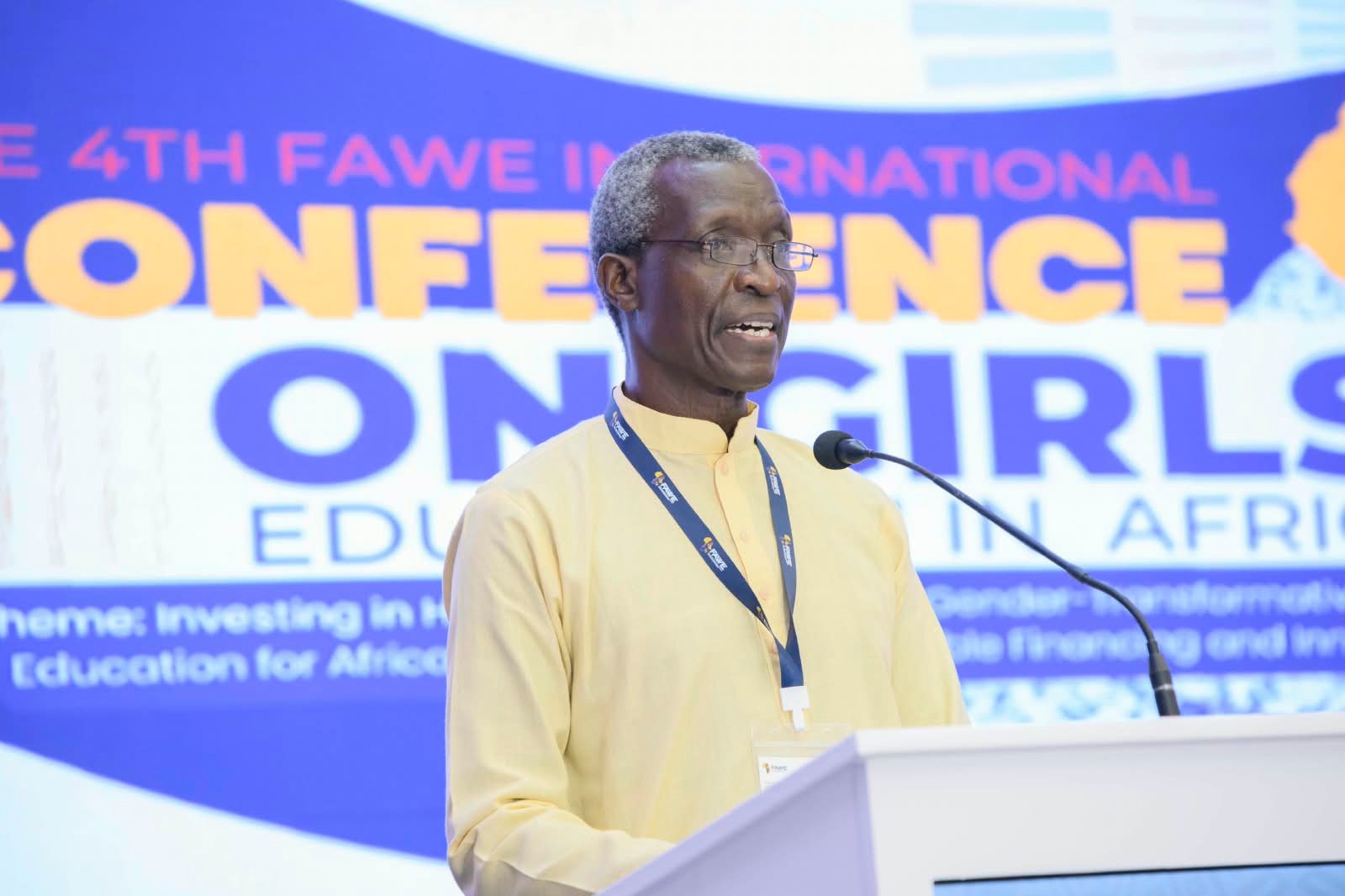
"The question is no longer whether we are committed to girls' education. It is whether our budgets are."
With that challenge, the Association for the Development of Education in Africa (ADEA) set a hard test for governments at the opening of the 4th FAWE International Conference on Girls' Education in Africa, held on 17 and 18 November in Nairobi, Kenya. Speaking on behalf of ADEA Executive Secretary Albert Nsengiyumva, ADEA Senior Program Officer, Shem Bodo, called on ministries of education and finance to make gender-responsive budgeting and expenditure tracking routine, so that every allocation can be traced to the girls it is meant to reach, and set out how ADEA will help countries deliver on commitments they have already made. The conference closed two days later with a Joint Communiqué and Call to Action that makes the same demand: sustainable financing, stronger accountability and commitments translated into measurable progress for girls across Africa.
The test matters because the gains of the past two decades are incomplete. Many African countries have made progress towards gender parity in primary school enrolment, but access has not necessarily translated into equity in learning or completion. Poverty, child marriage, early pregnancy, conflict, climate shocks and the digital divide continue to push many girls out of school, particularly at secondary level. These pressures are growing just as external financing for education contracts and debt constrains what governments can spend.
Against that backdrop, Shem argued that the continent does not need new promises so much as proof that existing ones are funded.
"If we cannot follow the money to the girl, we cannot honestly say that we have invested in her future,” he said.
Those promises are already on the record. At the 2025 ADEA Triennale in Accra, ministers adopted the Walking the Talk outcome document, which calls for more domestic financing, at least 20% of national budgets for education, transparent education spending, gender-responsive pedagogy, and flexible, affordable second-chance learning for underserved learners, including pregnant, married or displaced girls. At FLEX2026 in Lilongwe, Malawi, in July, 42 African governments committed to dedicated budget lines for foundational learning, stronger data and accountability systems, and scaling up evidence-based teaching approaches. Shem pointed to Ghana's Foundational Learning Agenda 2026–2040, launched in Accra the previous week, as an example of political commitment turned into action, and commended its champion, Vice President of Ghana and former Chairperson of the FAWE Africa Board, H.E. Prof. Naana Jane Opoku-Agyemang, who officially opened the conference virtually.
Turning commitment into results, he said, means making gender-responsive planning, budgeting and expenditure tracking routine across ministries of education and finance, with spending linked to results. He cautioned that innovation must close inequalities rather than widen them, particularly for rural girls, girls with disabilities and displaced girls, who are the first to be left behind when new approaches reach only those already in school.
The conference also produced a continental policy tool to hold that line. Kenya's Cabinet Secretary for Education, Hon. Julius Migos Ogamba, unveiled the Gender Framework for the Continental Education Strategy for Africa (CESA) 2026–2035, which embeds gender equality and inclusion in education policy, planning, implementation and accountability, and gives countries a common continental reference for gender-transformative education.
"Kenya affirms that girls' education is not a social sector expenditure. It is a strategic human capital investment," Ogamba said.
He urged governments to move beyond enrolment parity and focus on learning outcomes, school completion, and transitions to employment and economic empowerment, and highlighted Kenya's own reforms, including scholarships, mentorship and support for girls returning to school after interruptions to their education.
Partners pressed the point that getting girls into school is only the start. Mastercard Foundation Country Director for Kenya, Hannah Tsadik, and FAWE Africa Executive Director, Dr Martha Muhwezi, emphasised that girls need more than access, citing safe learning environments, mentorship, support to remain in education, and opportunities for young people to take part in the decisions that affect their futures.
Convened by the Forum for African Women Educationalists (FAWE) and co-hosted by Kenya's Ministry of Education under the theme "Investing in Her Future: Accelerating Gender-Transformative Education for African Girls through Sustainable Financing and Innovation," the conference brought together ministers, senior government officials, African Union representatives, development partners, researchers, civil society organisations and young people to discuss the financing, policy and approaches needed to advance girls' education.
For ADEA, Nairobi sets the agenda for follow-through, and the Association will concentrate its support in three areas. On accountability and data, it will track the commitments made at the Accra Triennale and FLEX2026, reporting on girls' learning, transition, completion and education financing, with attention to school leadership through the African Centre for School Leadership. On policy dialogue, it will carry the conference recommendations into follow-up on the Triennale outcomes, ministerial meetings and the African Foundational Learning Ministerial Coalition, working with FAWE, AU/CIEFFA, AU/IPED and other partners to help countries turn commitments into national action. On financing, it will work with its host institution, the African Development Bank, the Mastercard Foundation and other partners to advocate for increased domestic investment, gender-responsive budgeting, transparent expenditure tracking and financing that reaches the most marginalised girls, so that resources lead to better learning, retention, completion and opportunities beyond school. As African countries work towards the 2030 education targets, the measure of Nairobi will be whether the money can be followed to the girl.
