
AU Decade of Education Continental Steering Committee concludes its inaugural meeting, agrees to deliver leveraging existing education structures
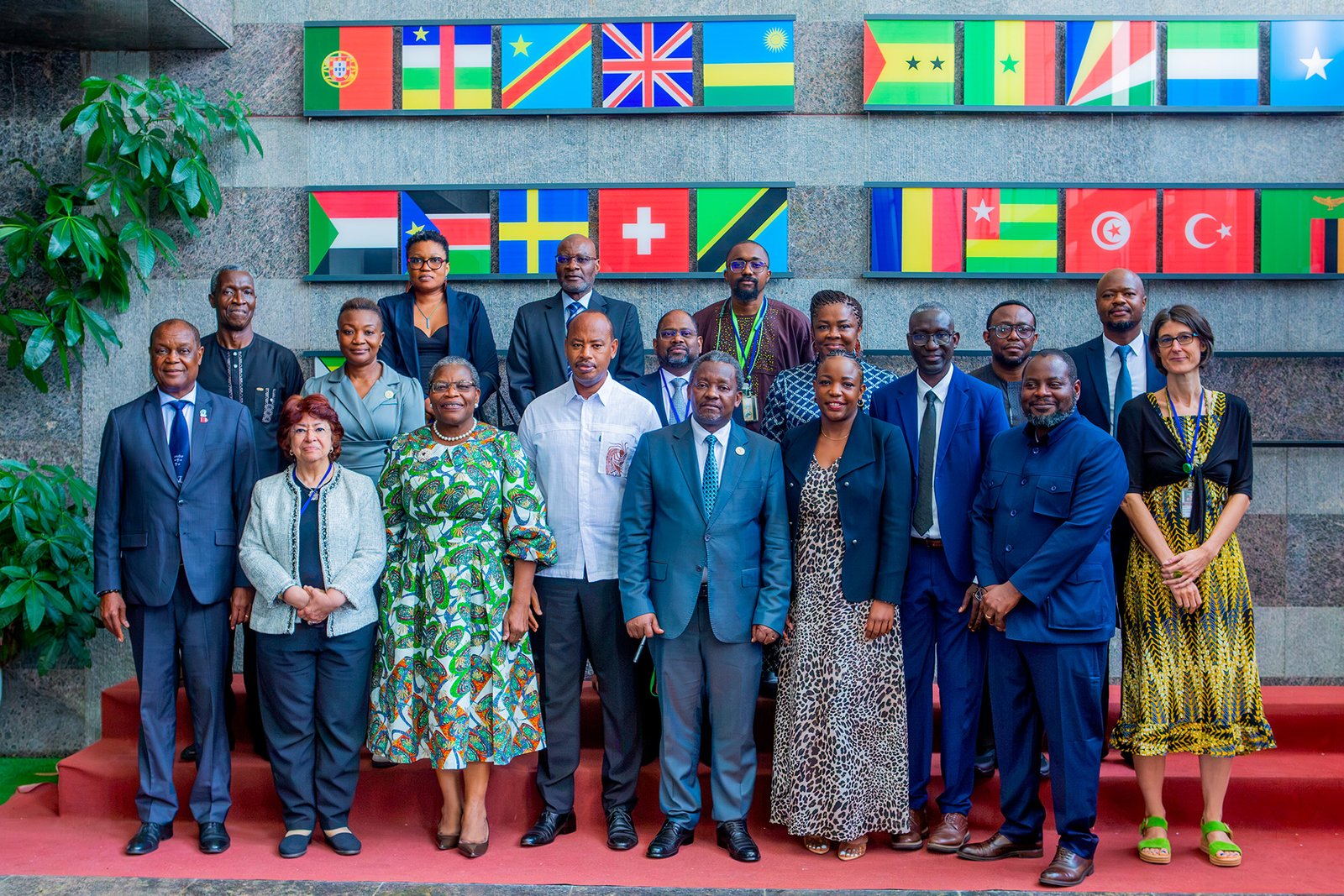
The Continental Steering Committee (CSC) for the African Union (AU) Decade of Accelerated Action for Education and Skills Development 2025-2034 closed its two-day inaugural meeting in Abidjan, Cote d’Ivoire, 20–21 October 2026, and agreed to work within the continent’s existing education architecture in delivering its mandate. The inaugural meeting, chaired by the AU Commissioner for Education, Science, Technology and Innovation, H.E. Prof. Gaspard Banyankimbona, also called for a continental shift to demonstrable skills and competencies that promote value creation in Africa.
In February 2025, the AU Executive Council declared the Decade as the principal continental vehicle for simultaneousdelivery of several strategies: the Continental Education Strategy for Africa 2026-2035 (CESA 26-35), the continental strategies on technical and vocational education and training (CTVET 25-34) and on science, technology and innovation(STISA 34), the Digital Education Strategy and the Continental Artificial Intelligence Strategy, aligned with Agenda 2063 and Sustainable Development Goal 4 (SDG 4). The Decade gives these instruments a ten-year horizon in which they are to be sequenced, resourced, implemented and jointly monitored.
With the existence of the different strategies and partners and funding streams moving at once, efforts tend to be fragmented and duplicated unless deliberately coordinated. The Continental Steering Committee was established to meet that need. Created after the High-Level Partners’ Consultation on the margins of the February 2026 AU Summit in Addis Ababa, it is an orchestration platform that aligns partner interventions with continental priorities, prevents fragmentation and duplication, pools resources behind high-impact, evidence-based initiatives, and ensures mutual accountability through transparent reporting and joint review. This inaugural meeting therefore launched the Committee’s operational phase: aligning members around common objectives and laying the practical foundation for coordination, a clear division of responsibilities and structured action over the Decade.
In his remarks while opening the meeting, the Chairperson tasked members on results-focused actions, arguing that the Committee’s efforts will be judged by what it delivers.
“Africa is moving decisively from educational commitment to educational outcomes, from declaration to delivery. Our young people are waiting for quality learning, empowered teachers and education that responds to African realities. We have a responsibility to deliver on those expectations. This Committee should be measured by what it delivers. We need to be able to show how our work is advancing education and skills development across the continent.”
While welcoming CSC members to the session as host Secretariat, the ADEA Executive Secretary, Albert Nsengiyumva, was bullish about the trust bestowed on ADEA while pushing for the integration of country needs, coordination and accountability in the Committee’s work.
“Our journey began in Abidjan, and we are grateful for the trust placed on ADEA. The African Union Commission has entrusted us with an important mandate, and we take that responsibility seriously. We now have an opportunity to turn that trust into meaningful collective progress. We need countries to be visible and actively engaged within the CESA clusters. Their participation is essential if our continental work is to respond to what education systems actually need. We already have work under way on accountability, data use, foundational learning, school leadership, secondary education and TVET, and higher education, among others. We need to connect those efforts and deliver through a stronger coalition.”
Deliberations over the course of two days resulted in several alignments and decisions. For instance, members agreed that CSC will give greater voice to young people, teachers, private sector, Member States, and Regional Economic Communities (RECs), bringing on board all the five RECs, the Africa Continental Free Trade Area (AfCFTA), and the Africa Business Forum as members. The Committee will also clarify and document how it interfaces its oversight role with other CESA structures, thematic clusters, and regional and national coordination mechanisms. It will meet twice a year and hold extraordinary meetings when needed. The CESA cluster leads will regularly present progress to the Committee on a rotating basis.
To reduce duplication and fragmentation, the Committee will map continental, regional and externally funded education initiatives and explore an annual accountability scorecard for the Decade, linked to existing reporting frameworks to reduce the reporting burden on Member States. Resource mobilization will be coordinated, recognizing financial and in-kind contributions, with the Secretariat tracking partner pledges in a register. Members also agreed to develop one continental communication campaign, constituting a small working committee to develop a robust communication strategy for the Decade.
Partners including the co-chairs (UNICEF and UNESCO), AUDA-NEPAD, Human Capital Africa, Forum for African Women Educationist (FAWE), African Development Bank, World Food Programme, International Labour Organization, Education International, Adapt IT, and ADEA pledged their financial and technical contributions, including aligning major events with the Decade. The Secretariat will track these commitments.
The Secretariat will revise documents, including the Committee’s terms of reference, roles and responsibilities, workplan, and a draft communique with key resolutions for adoption, together with an updated calendar of events. A 100-day action plan will set out what is to be delivered, with key responsibilities and timelines. The Committee is expected to present a progress report at the next meeting of the AU Specialized Technical Committee on Education, Science, Technology and Innovation.
CSC is an orchestration platform that aligns partner interventions with continental priorities, prevents duplication, pools resources and secures mutual accountability.
