
From Co-Designing Sign Language Curricula in Ghana to Adapting Teaching Without a Diagnosis in Rwanda
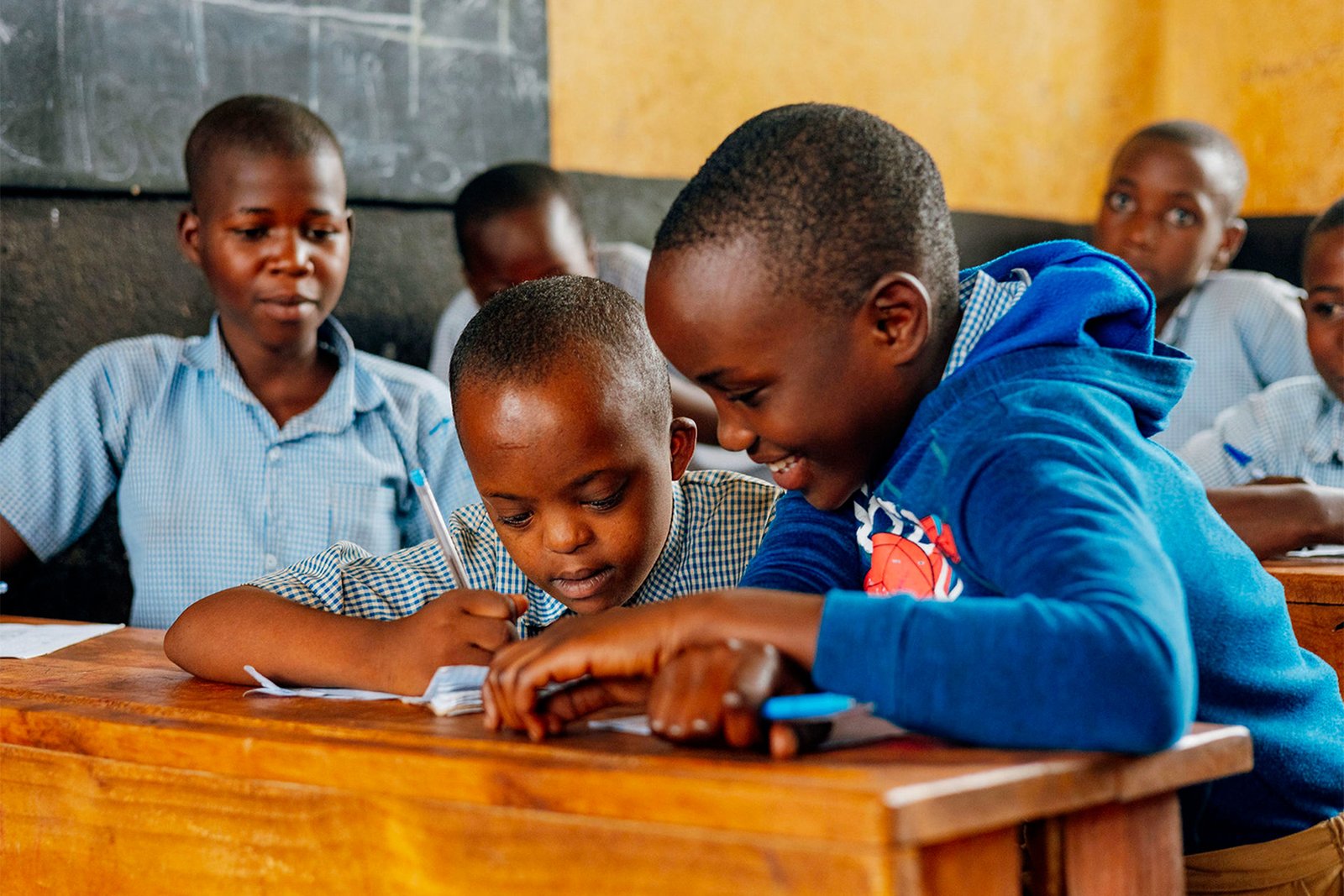
In Ghana, deaf people sat in the room as designers of a new Ghanaian Sign Language curriculum running from kindergarten to senior high school. In Rwanda, teachers can adapt their classrooms for a child with a disability without waiting for a medical diagnosis. In Kenya, assessment of a child's functioning is linked directly to medical and rehabilitation referrals. These three approaches were shared at a peer learning webinar convened by the Association for the Development of Education in Africa (ADEA), in partnership with AccessEnable, on the theme "Disability-Inclusive Foundational Learning: From Policy Commitments to System-Level Implementation." Ministry of Education directors and technical focal points for foundational learning, inclusive education, curriculum, teacher development, assessment and planning used the session to examine what is working, what has been learned in implementation and where these practices could be taken to scale.
The webinar responds to a gap that opens early. For children with disabilities, communication barriers, late identification of learning support needs and inaccessible learning materials can undermine foundational learning well before they enter primary school. African countries have strengthened inclusive education policies and institutional frameworks, but progress has been meaningful and uneven, and inclusion depends on what happens at every stage of a child's learning, from early childhood education to primary school and beyond. Opening the session, ADEA Executive Secretary, Albert Nsengiyumva, described foundational learning as a fundamental right and a prerequisite for continued learning and full participation in society, and recalled the commitments endorsed at the 2026 Foundational Learning Exchange (FLEX) in Lilongwe to strengthen equitable access, school readiness and the transition from early childhood education to primary school.
"This challenge cannot be addressed through policy commitment alone. It requires practical, sustained action across the education system," he said, encouraging countries to draw on one another's experience and adapt what works to their own contexts.
Founder and CEO of AccessEnable, Yvette Iyadede, set out what that action involves. Her thematic presentation outlined five interconnected building blocks for turning disability-inclusive policy into practice: accessible communication, with sign language, Braille, tactile, audio and digital formats built into learning resources; functional screening, so that needs are identified early and support follows quickly; Universal Design for Learning (UDL), to accommodate the different ways children engage with and demonstrate knowledge; co-design with organisations of persons with disabilities; and individualised learning plans to track progress and adjust support. Her central argument was that disability is multidimensional, and that accessibility must shape curriculum design, assessment, teacher preparation and resource development from the start rather than be added as an afterthought.
Ghana showed what that looks like in a curriculum. According to Deputy Director-General of Ghana's National Council for Curriculum and Assessment (NaCCA), Dr Eric Amoah, more than 90 per cent of deaf children in Ghana are born to hearing parents, and many arrive in kindergarten without an established first language. NaCCA's response is a standards-based Ghanaian Sign Language curriculum spanning kindergarten to senior high school, supported by grade-specific teacher manuals and learner materials. It takes a bilingual approach, establishing Ghanaian Sign Language as the foundation for later learning, including written English, and its development prioritised cultural relevance and linguistic authenticity.
"Deaf people were in the room as designers, not as beneficiaries. We all co-created the curriculum," Dr Amoah said.
The early evidence is encouraging. Ahead of national rollout, a 2025 pilot involving approximately 253 learners, 50 teachers and 29 classroom observations found positive results in learner engagement, teacher confidence and acceptance of the materials. It also set Ghana's priorities for scale: financing assistive devices, recruiting specialised teachers and integrating Ghanaian Sign Language into pre-service teacher education.
Kenya's challenge is coordination. Head of Special Needs and Inclusive Education at Kenya's Ministry of Education, Frederick Haga, described how inclusive education is being made to work within a decentralised system, where national and county governments share responsibility for foundational learning.
"Admission is not just about getting them to school but ensuring that the children are participating in the learning process," he said.
What sets Kenya's approach apart is the link between functional educational assessment and the services a child may need beyond the classroom. Through the Kenya Institute of Special Education (KISE) and collaboration with civil society organisations, assessment findings inform educational placement and individualised education plans, while referral mechanisms connect learners to medical and rehabilitation services where necessary.
Mr Haga drew two lessons from implementation: systems must distinguish clearly between screening, functional assessment and diagnosis, and continuous professional development must be institutionalised so that teachers are prepared. He warned that the existence of a policy is not enough on its own.
"We need to breathe life into that policy for it to really be effective."
Rwanda brought the perspective of the school. Representing Deputy Director-General of the Rwanda Basic Education Board (REB), Dr Flora Mutezigaju, Irene Muyizere presented a five-step pathway that runs from classroom-based identification to immediate interventions, multidisciplinary assessment, educational decisions and individualised support. Its most distinctive feature is that teachers can introduce classroom adaptations without a prior medical diagnosis, so support begins as soon as a need is noticed. Where more help is needed, school-based multidisciplinary assessment teams use the Child Functioning Module – Teacher Version to guide curriculum adaptations, placement and referrals, and individualised education plans set measurable learning objectives and assign responsibility for follow-up.
Rwanda is also turning that information into planning data. Identification and assessment records are being integrated into the School Data Management System to strengthen disability-disaggregated data and inform national planning, budgeting and resource allocation. Over the next two years, the country aims to establish functioning multidisciplinary assessment teams across its schools, starting with pre-primary and primary education.
Taken together, the three countries showed that disability-inclusive foundational learning depends on coherence across curriculum, assessment, teacher development, support services and education planning, and that no single reform delivers it alone. The exchange also produced concrete openings for collaboration. Ghana is seeking to learn from Kenya's and Rwanda's approaches to financing specialised teacher support and assistive technologies, while Rwanda expressed interest in making greater use of learner identification data for inclusive academic assessment.
For ADEA, the webinar is part of its work to help countries take forward their FLEX 2026 commitments through peer learning and policy dialogue, connecting ministries that are solving the same problems so that a practice proven in one system can be adapted in another. The requests that emerged from Ghana and Rwanda give that work a clear starting point. The measure of progress will not be policy adoption or enrolment alone, but whether education systems can ensure that every child with a disability can access school, participate, learn and progress.
