
ADEA strategic retreat sets course for stronger coordination and support to African countries in 2027 on education quality and accountability
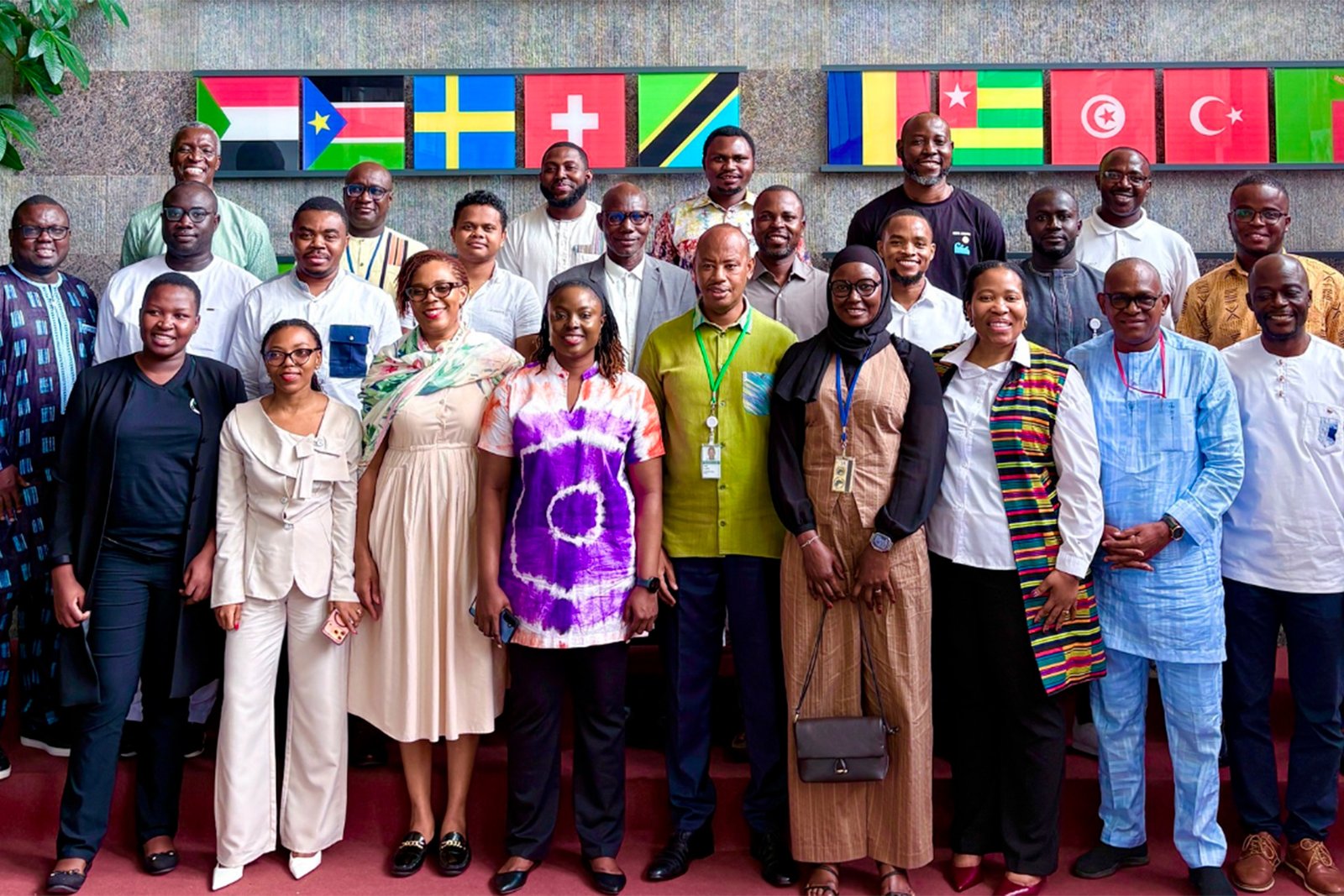
The Association for the Development of Education in Africa (ADEA) concluded its three-day Internal Working and Staff Capacity Development Meeting in Abidjan, Côte d’Ivoire, on 28 October 2026, with a renewed commitment to strengthening institutional coordination, promote country ownership and accountability for results. The team equally resolved to work as a single institution offering a coherent package of support, across its various initiatives.
Held from 26 to 28 October to examine how the organization can work more cohesively across its initiatives and deliver greater impact in African countries, this second retreat reflected on ADEA's progress since the March 2026 strategic retreat with country focal points and partners, including how to drive the implementation of the recommendations from the 2025 ADEA Triennale and FLEX2026, particularly the need to strengthen country focal points, improve coordination across initiatives, and establish mechanisms for tracking progress against agreed education priorities, towards ‘One ADEA’ as a guiding principle for planning, working arrangements and priorities for 2027.
The review was candid. ADEA’s work on foundational learning, secondary and technical and vocational skills development, higher education and scientific research, school leadership, education and skills data, education technology, and access and inclusion addresses connected parts of the same national systems, yet initiatives have sometimes planned and reported separately. A single Ministry could deal with three or four ADEA contacts making the leadership briefings on the full portfolio challenging. Planning can also be overambitious, resulting in the carryover of interventions into the following year with the same constraints. As participants put it, ADEA either succeeds together or fails separately.
Opening the meeting, ADEA Executive Secretary Albert Nsengiyumva set out what is at stake.
“Human capital is the engine for everything else we can do. Countries may have mines, oil and other resources, but unless they start with education, they will maintain the status quo. Getting quality education and valuable skills is really our goal. Whether we’re talking about data, school leadership or foundational learning, they all converge into sharing evidence of what is possible and how countries can improve their education and skills systems. That’s what we’re here to do.”
The first principle agreed was delivery before new commitments. Quarterly reviews help decide whether to accelerate, redesign, or leave out slow or stalled interventions, and new commitments will undergo critical scrutiny regarding conditions, costs and dependencies. A realistic and integrated 2027 workplan and budget will tie initiatives, ICQNs and enabling functions to shared country results. ADEA will have one senior country focal point to coordinate technical aspects, including other intervention-targeted focal points, and keep leadership briefed, with conflict-affected and transition countries kept in scope.
The Executive Secretary also urged staff to break with the routine of letters, terms of reference and lengthy assessments: existing evidence, such as findings from national, regional, continental, or global studies and assessments may already suffice, and a focused engagement with the leadership and senior officials can often identify key levers to unlock progress.
ADEA also reiterated to need to occupy its role as thought leader on Africa’s education. As Kim Kerr, Senior Director at the Mastercard Foundation described it,
“ADEA is the voice of education in Africa, and it must lead on the issues at the forefront of countries’ minds.”
She hoped ADEA could drive the research agenda on questions countries prioritize, beginning with issue papers on education financing, artificial intelligence, critical thinking and adaptable learning.
Evidence will be matched by follow-through. Accountability frameworks and dashboards for high-level convenings such as Triennale and FLEX will track country commitments and inform engagements between these convenings. Monitoring, evaluation and learning, knowledge management, communications and advocacy will work as one.
Experts from the Mastercard Foundation, the International Association for the Evaluation of Educational Achievement (IEA), the UNESCO International Institute for Educational Planning (IIEP), the Hempel Foundation and the Regional Teachers Initiative for Africa (RTIA) contributed to these discussions.
At the continental level, ADEA’s resources will be matched to its role as Secretariat of the Continental Steering Committee for the African Union Decade of Accelerated Action for the Transformation of Education and Skills Development in Africa 2025–2034, and as lead of the Continental Education Strategy for Africa (CESA) Cluster on Education System Governance, Policy, and Finance. ADEA will also enhance the involvement of Inter-country Quality Nodes (ICQNs) against the CESA clusters, without presuming any merger.
As ADEA’s Senior Programs Officer, Shem Bodo observed, countries already understand their education challenges and priorities. The question for ADEA is how to bring its collective expertise and resources to bear on practical, lasting solutions to those needs.
Held under the theme, “One ADEA Goal: Strengthening Systems, Collaboration, and Accountability for Results,” the retreat brought together colleagues from the Secretariat, ICQNs, and external education experts.
