
ADEA facilitates Ministerial Dialogue on skills and jobs in Africa as 29 African countries set deadlines to turn skills commitments into action
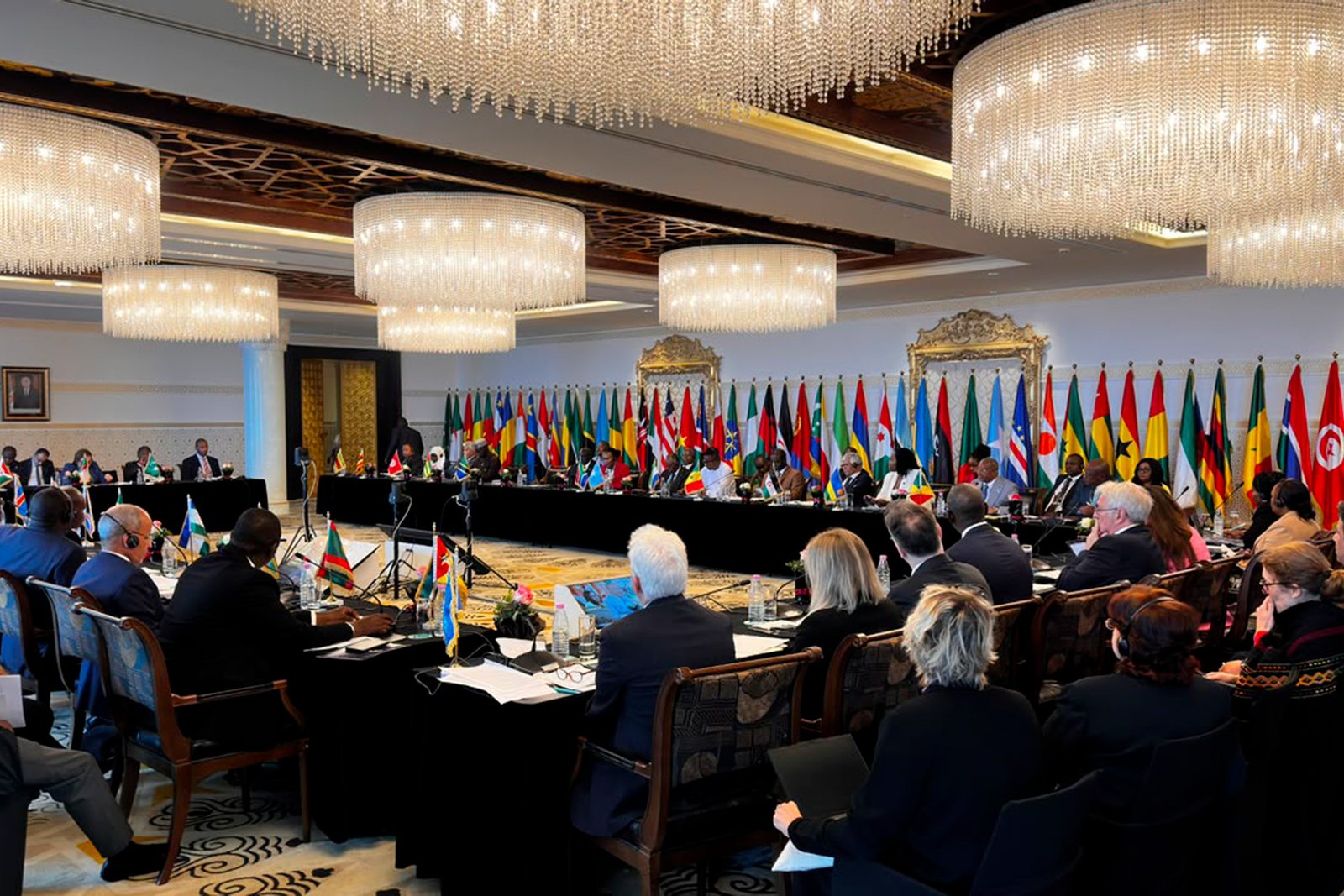
The Association for the Development of Education in Africa (ADEA) moderated the High-Level Ministerial Dialogue at the Africa Skills Policy Forum in Oran, Algeria, where Ministers and Heads of Government Delegations from 29 African countries adopted the Oran Declaration on the Future of Skills in Africa. Jointly organised by the African Union Commission (AUC) and Algeria’s Ministry of Vocational Training and Education, the Forum ran from 17 to 18 November 2026 under the theme “Shaping the Future of Skills, Empowering Africa’s Youth”. It closed with an agreement that goes beyond aspiration. Countries committed to an Oran Action Framework 2026–2027 and to a timetable for delivering crucial aspects of the framework, such as the nomination of national technical and vocational education and training (TVET) focal points within three months, the identification of at least one priority area for practical cooperation within six months, and the submission of a consolidated progress report by the end of 2027.
The urgency is demographic and economic. Africa is home to the world's youngest population, with around 60 percent of its people under the age of 25. This youthful population is one of the continent's strategic assets, yet too many young people remain unemployed, underemployed or outside education and training altogether, while the education and training systems are unable to meet employer skill demands. Digitalisation, artificial intelligence, automation and the green transition are changing what it means to be skilled faster than most national systems can adapt. The continent does not lack strategies: the African Union’s Continental TVET Strategy 2025–2034 and the Decade of Accelerated Action for the Transformation of Education and Skills Development in Africa 2025–2034 already set the direction. The Oran Declaration provides an opportunity to strengthen existing continental implementation mechanisms, enhance cooperation among Member States, and accelerate the translation of shared commitments into coordinated regional and national action.
The gap between strategy and implementation set the tone for the Ministerial Dialogue. Moderating the exchange, the ADEA Executive Secretary, Albert Nsengiyumva, called for a decisive shift from continental strategies to coordinated implementation, pressing for systems reforms that respond to the realities of African economies and the aspirations of their young people. The Declaration answers that call directly, attaching deadlines, a follow-up mechanism, and a reporting cycle to commitments that might otherwise have remained statements of intent.
Addressing the Forum, African Union Commissioner for Education, Science, Technology and Innovation, Prof. Gaspard Banyankimbona, acknowledged the commitment of Member States and recognised the contribution of development partners, including ADEA, UNICEF and UNESCO, to the continent’s education and skills agenda. He called for TVET to be repositioned as a preferred pathway to employment, innovation, entrepreneurship and industrial development, and for the private sector to move from being a beneficiary of training to an active co-designer of programmes. Africa, he argued, must become an active innovator and developer of emerging technologies, not a passive consumer.
Those priorities are now captured in the Oran Declaration. On financing, countries named the African Education, Science, Technology and Innovation Fund (AESTIF) as the privileged vehicle for mobilising domestic resources, technical assistance and blended finance for skills development, and called on industry, professional bodies and social partners to share in the design, delivery, assessment and financing of training. On mobility, they reaffirmed support for the African Continental Qualifications Framework and the African Continental Higher Education and Skills Area and committed to aligning national and regional qualifications frameworks with them. They urged Member States that have not yet done so to ratify the Addis Convention on the recognition of qualifications, so that a certificate earned in one African country carries weight in another.
The Declaration is equally explicit about who must not be left behind. It singles out young people not in employment, education or training, alongside young women, rural communities, persons with disabilities and learners in conflict and emergency settings, and commits countries to stackable micro-credentials, second-chance pathways and the recognition of skills acquired outside formal classrooms. Looking ahead, it calls for digital skills, artificial intelligence, cybersecurity and green competencies to be built progressively into training, for skills observatories and labour-market intelligence to anticipate the jobs of tomorrow, and for Member States to report on TVET performance indicators under the Continental Education Strategy for Africa (CESA) 2026–2035 and the Continental TVET Strategy 2025–2034.
What distinguishes Oran from many continental declarations is its follow-through. The Action Framework, to be developed with the AUC, will prioritise practical initiatives such as joint training programmes, exchanges of expertise, peer learning, and institutional partnerships. The Commission will coordinate follow-up through existing mechanisms, and an annual technical review will assess progress and feed into monitoring of the Continental TVET Strategy 2025–2034. The first milestone falls in February 2027, when countries are expected to have designated their national focal points.
The Ministerial Dialogue sat at the centre of the wider Forum programme. Two Ministerial sessions, chaired respectively by Algeria’s Minister of Vocational Training and Education, Dr. Nassima Arhab, and Prof. Banyankimbona, examined TVET reform for Agenda 2063 and the skills Africa’s workforce will need for emerging industries, while expert and high-level panels turned to adapting AI-enabled instructional design for basic occupations, collaboration between governments, industry and training institutions, and building an African model of institutional cooperation for TVET excellence. Opening the first session, Minister Arhab argued that TVET must be recognised “not simply as an educational pathway, but as a strategic instrument of industrial policy, economic diversification and sustainable development.”
Alongside the Forum, the African Skills Olympics, held under the High Patronage of President Abdelmadjid Tebboune of Algeria, brought together nearly 600 young trainees from 18 African countries competing in 45 specialties. The Declaration itself recognises such competitions as instruments for raising training standards and calls for regional centres of excellence and shared expertise in judging and standards.
The Oran Forum builds on the Africa Skills Week, held from 12 to 16 October 2026 in Harare, Zimbabwe. For ADEA, Oran reaffirms the Association’s role in facilitating high-level policy dialogue that moves countries from shared ambition to coordinated action. The Action Framework’s emphasis on peer learning, knowledge exchange and institutional partnership mirrors the work ADEA carries out with its member countries and positions the Association to support them as they translate the Declaration into national priorities. Separately, the Government of Algeria has been mandated to establish a Continental Secretariat for TVET. ADEA commits to working alongside the Government to support the establishment and operationalisation of the Secretariat as a mechanism for stronger continental coordination, knowledge exchange, and implementation of shared TVET priorities.
As implementation begins, the outcomes of Oran will advance the Continental TVET Strategy 2025–2034, the AU Decade of Accelerated Action for the Transformation of Education and Skills Development in Africa 2025–2034, and the aspirations of Agenda 2063. The real measure of the Declaration will be whether Africa’s young people find the skills, and the jobs, it promises.
